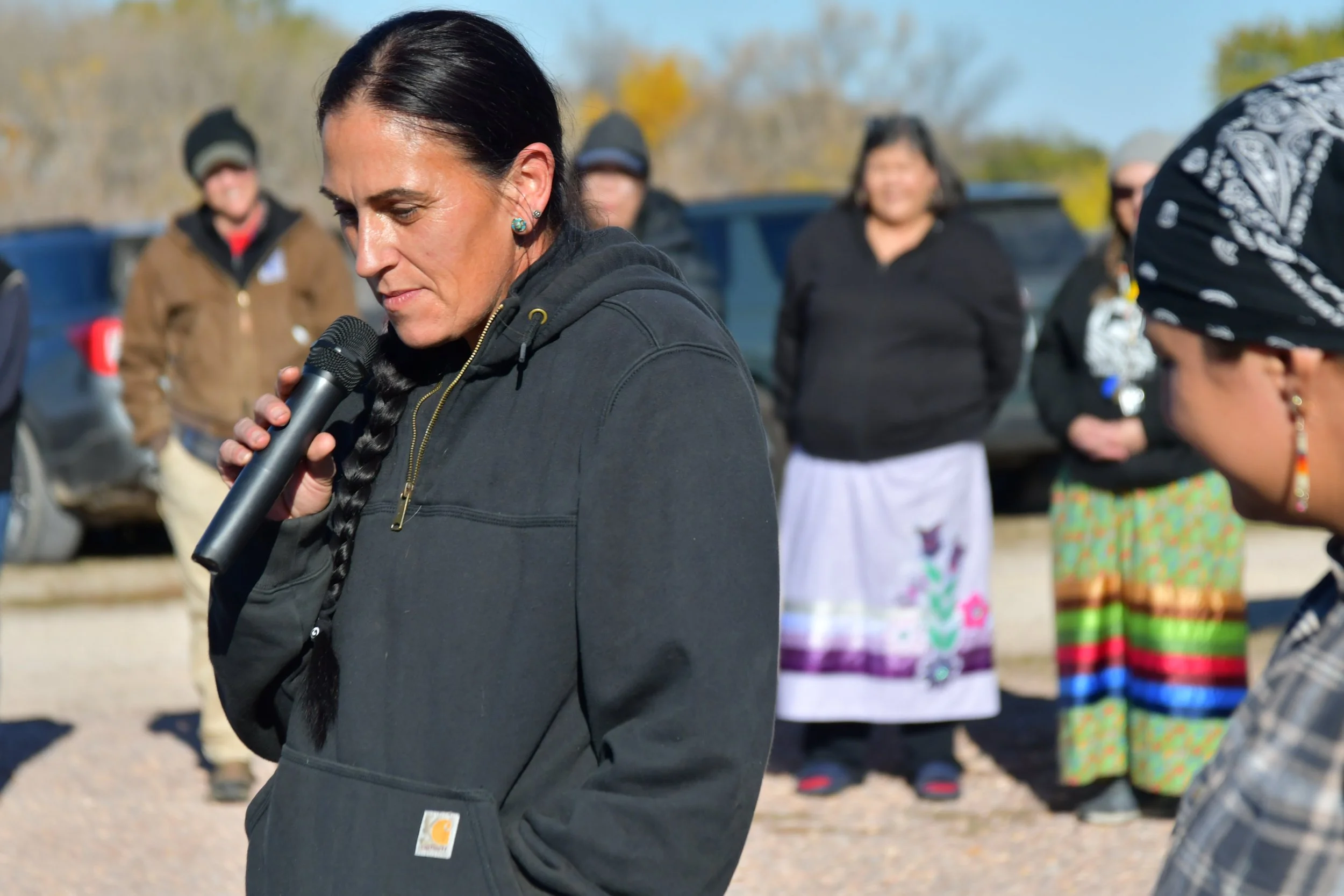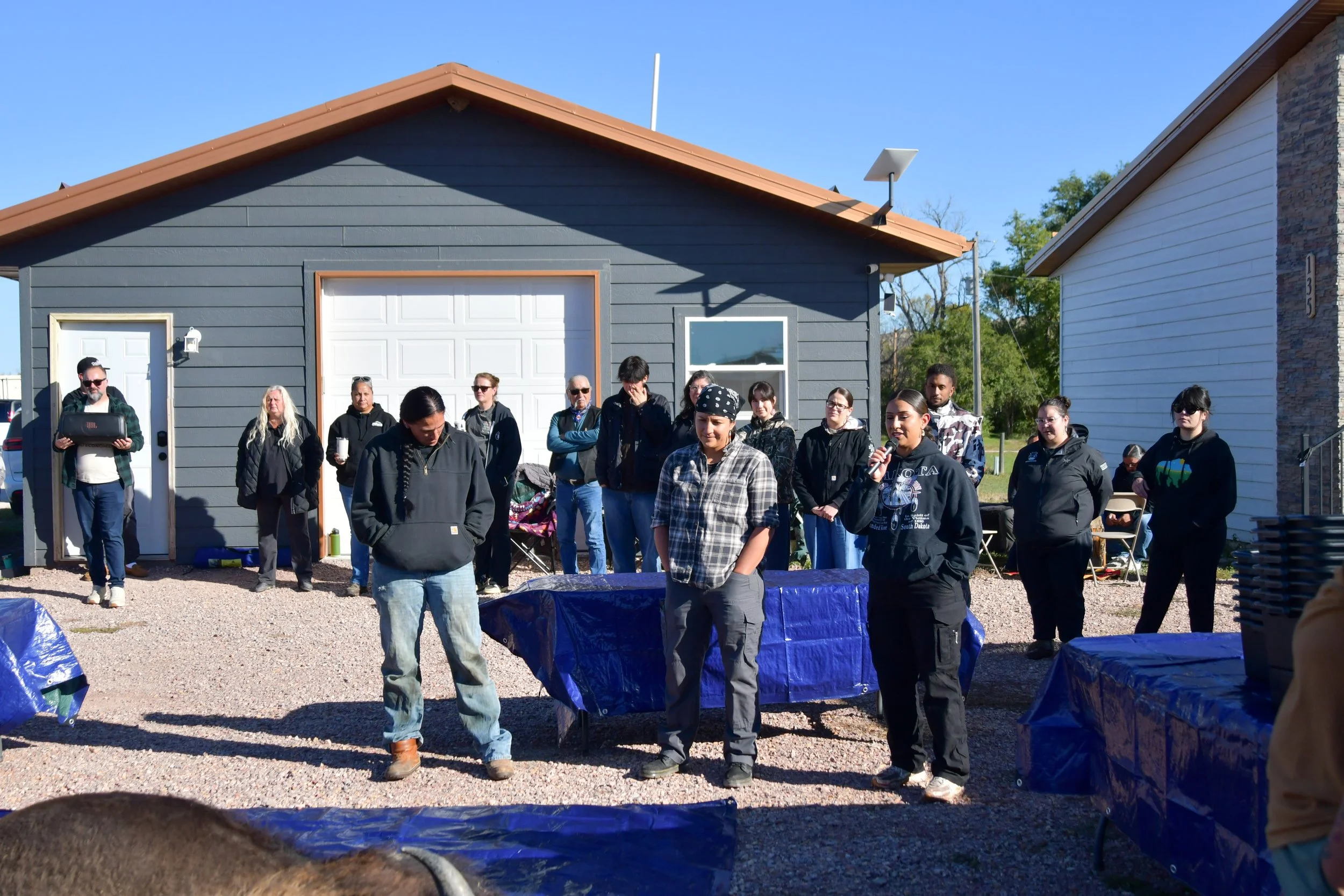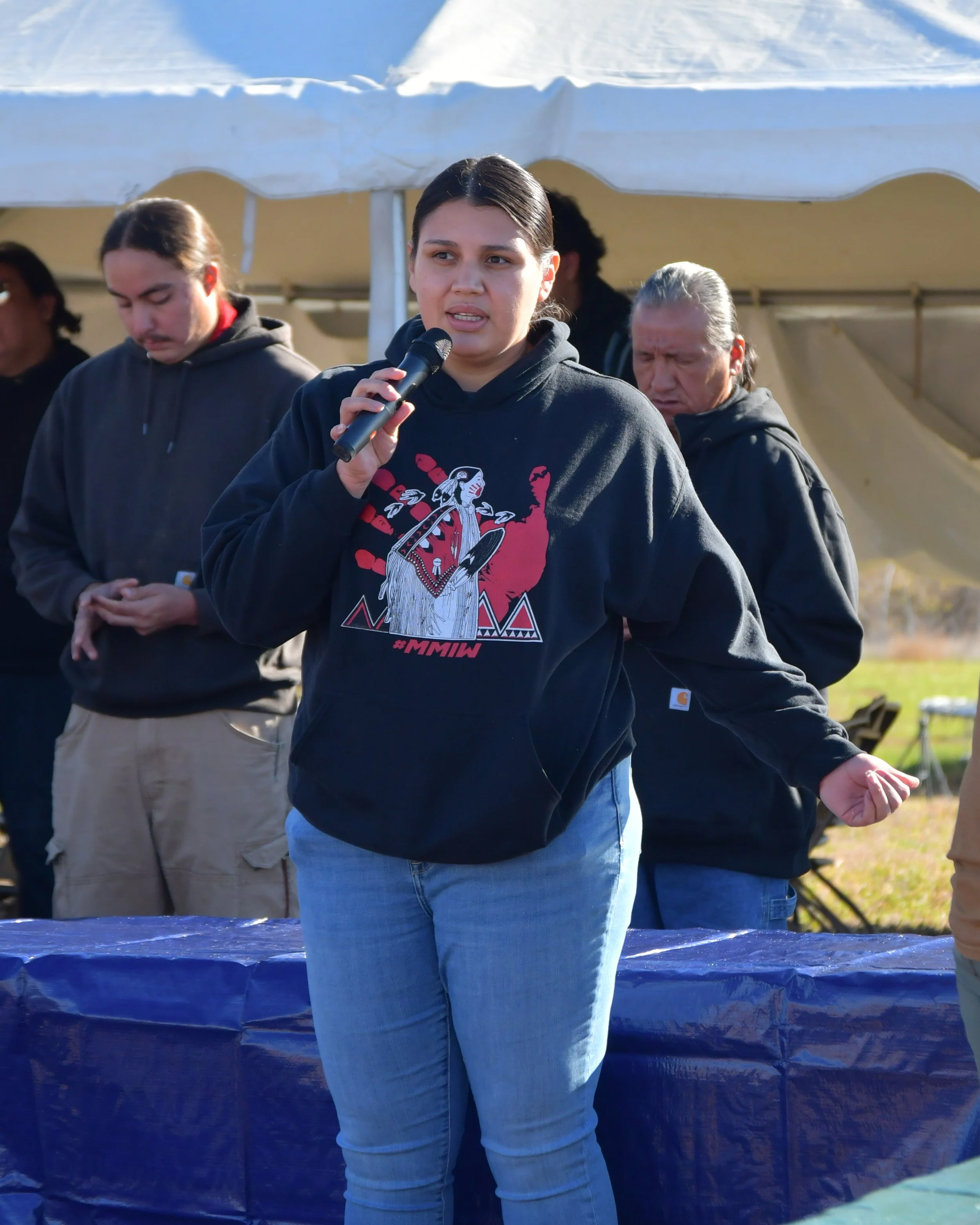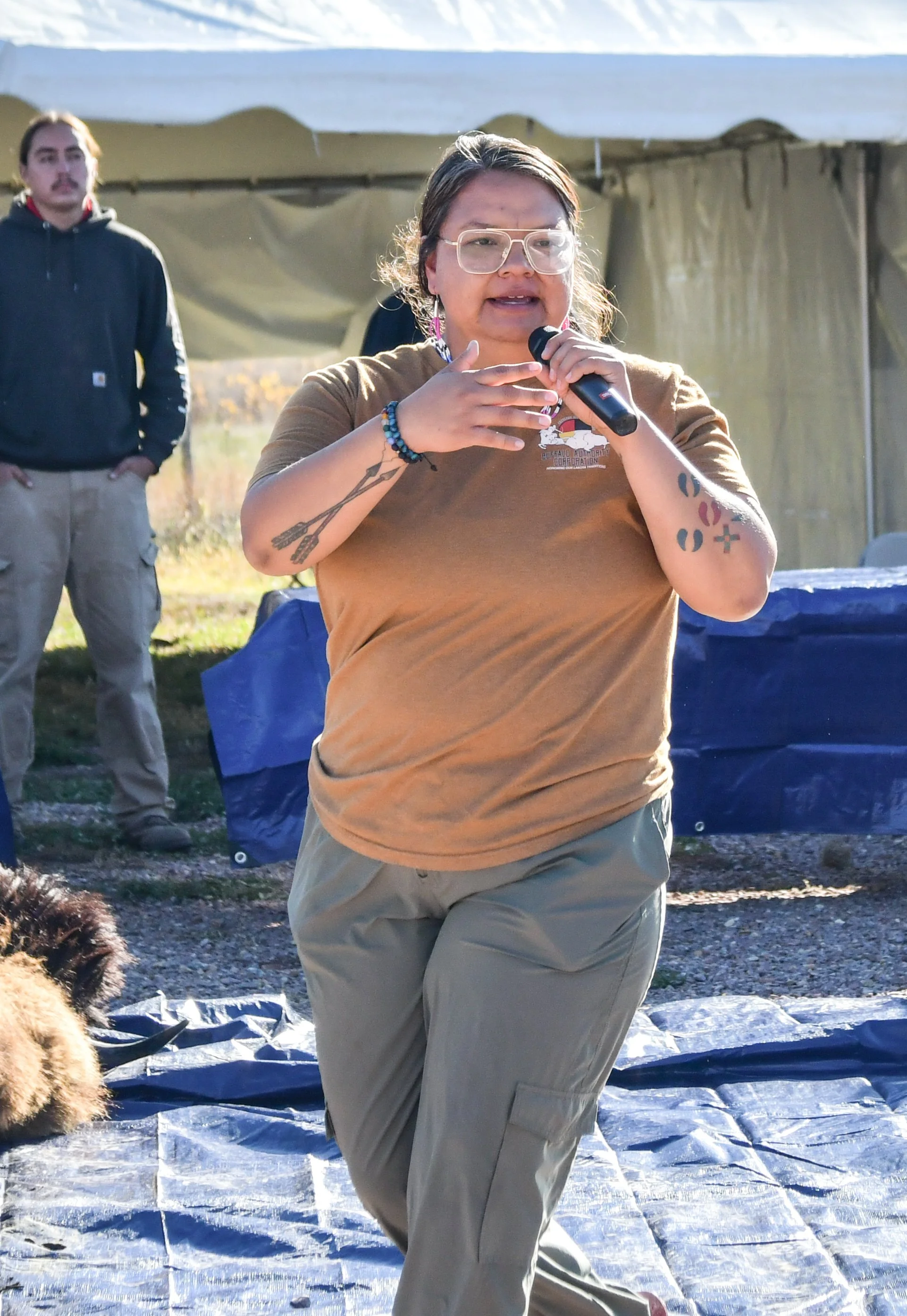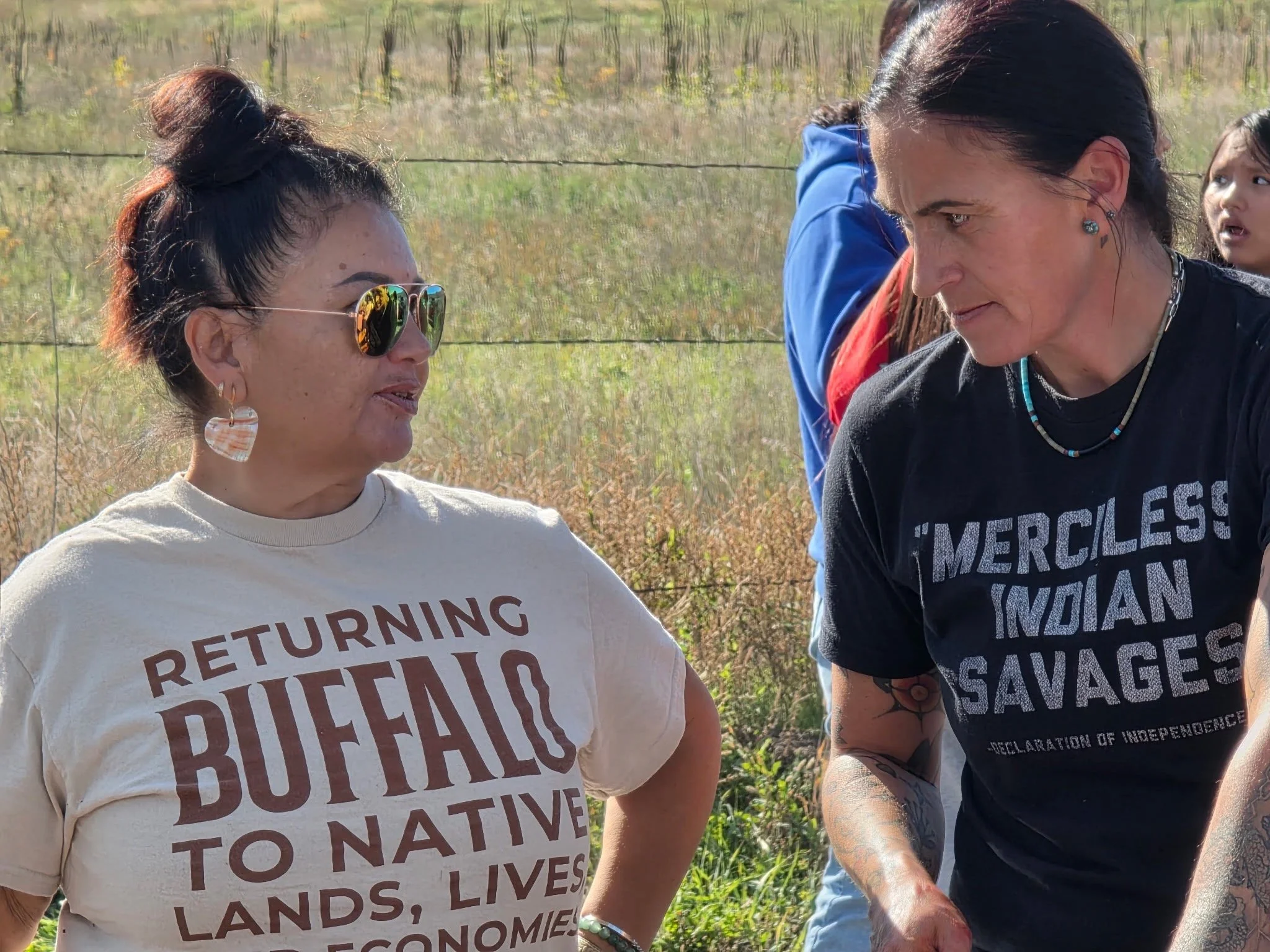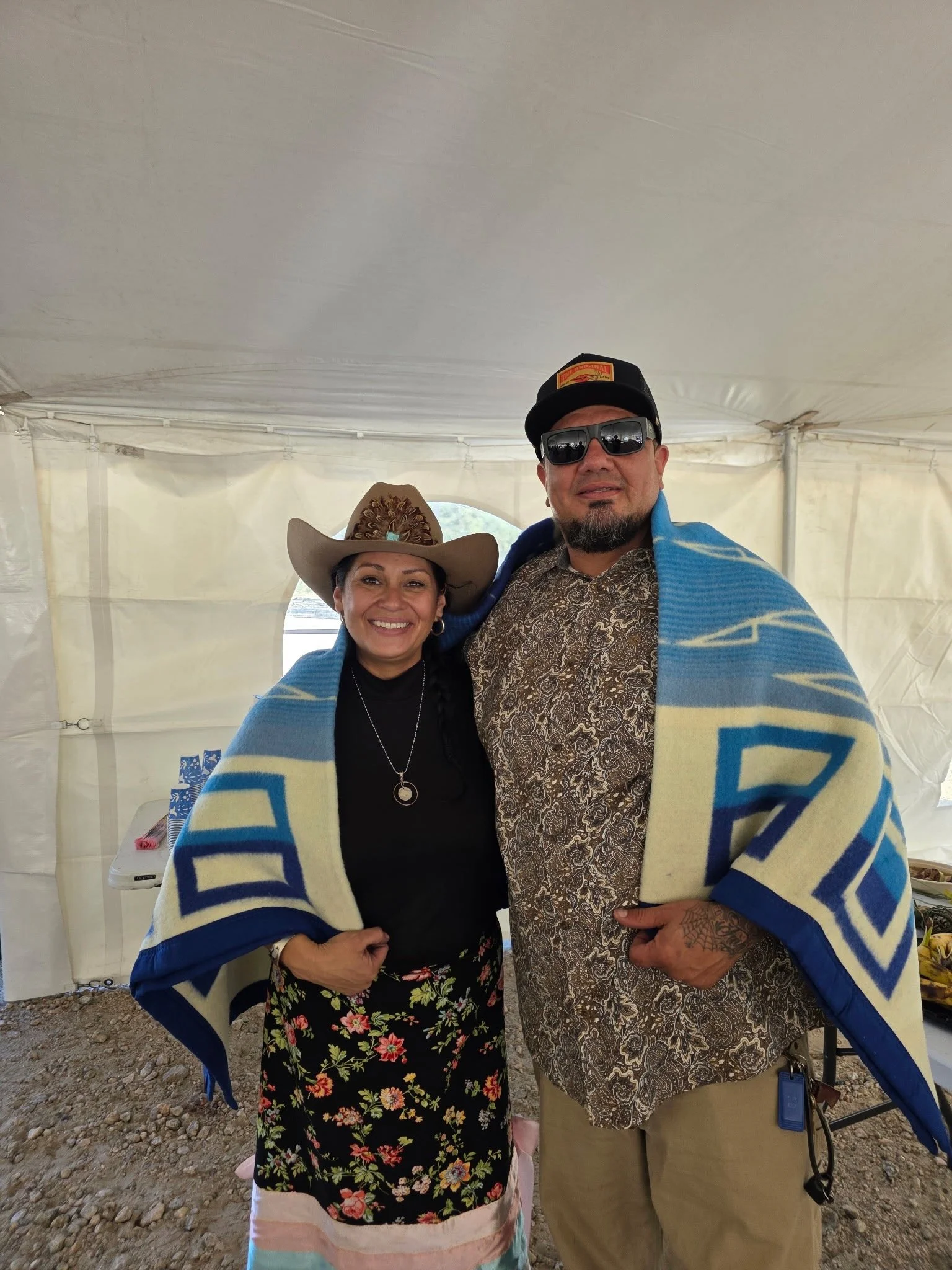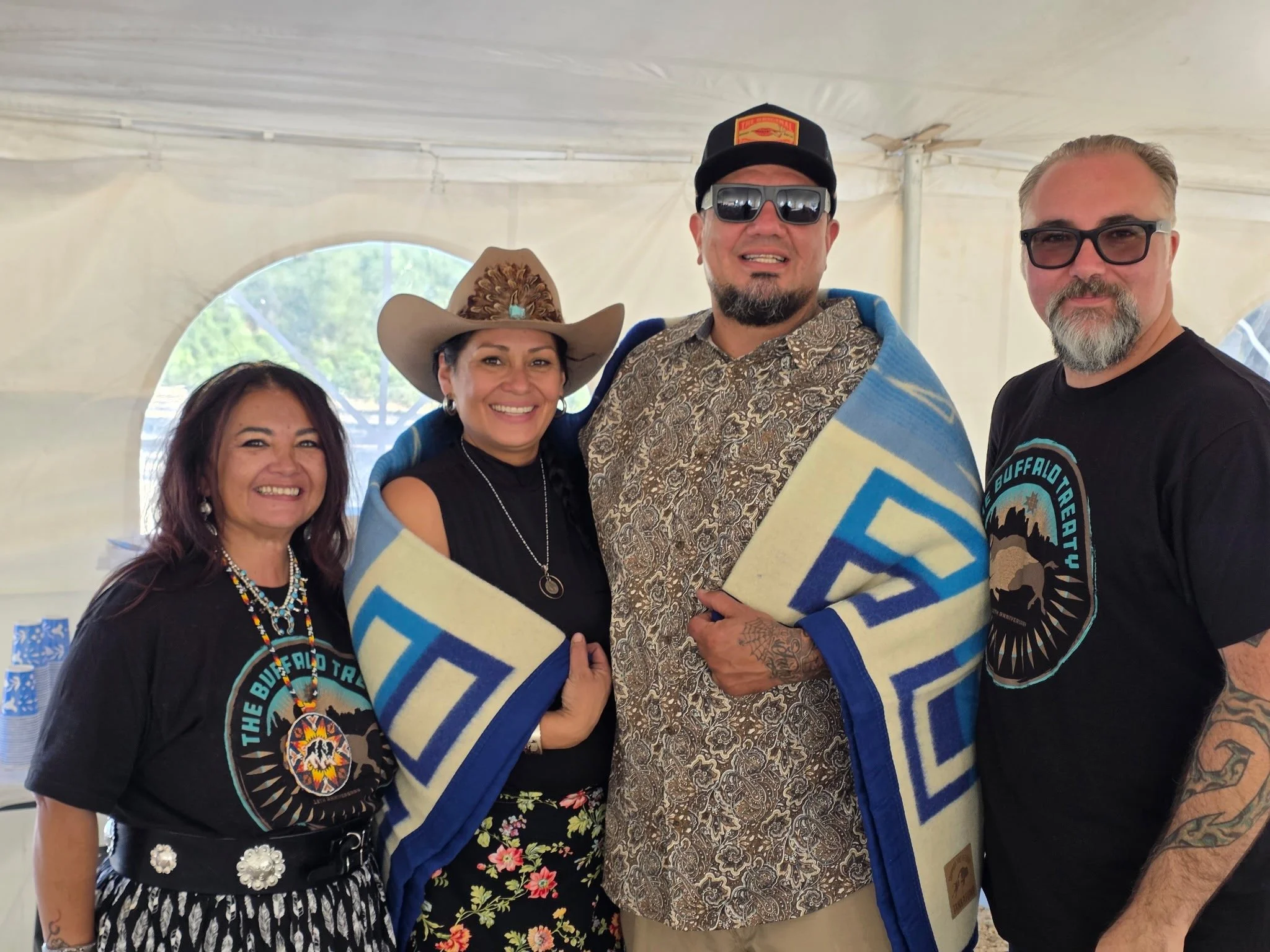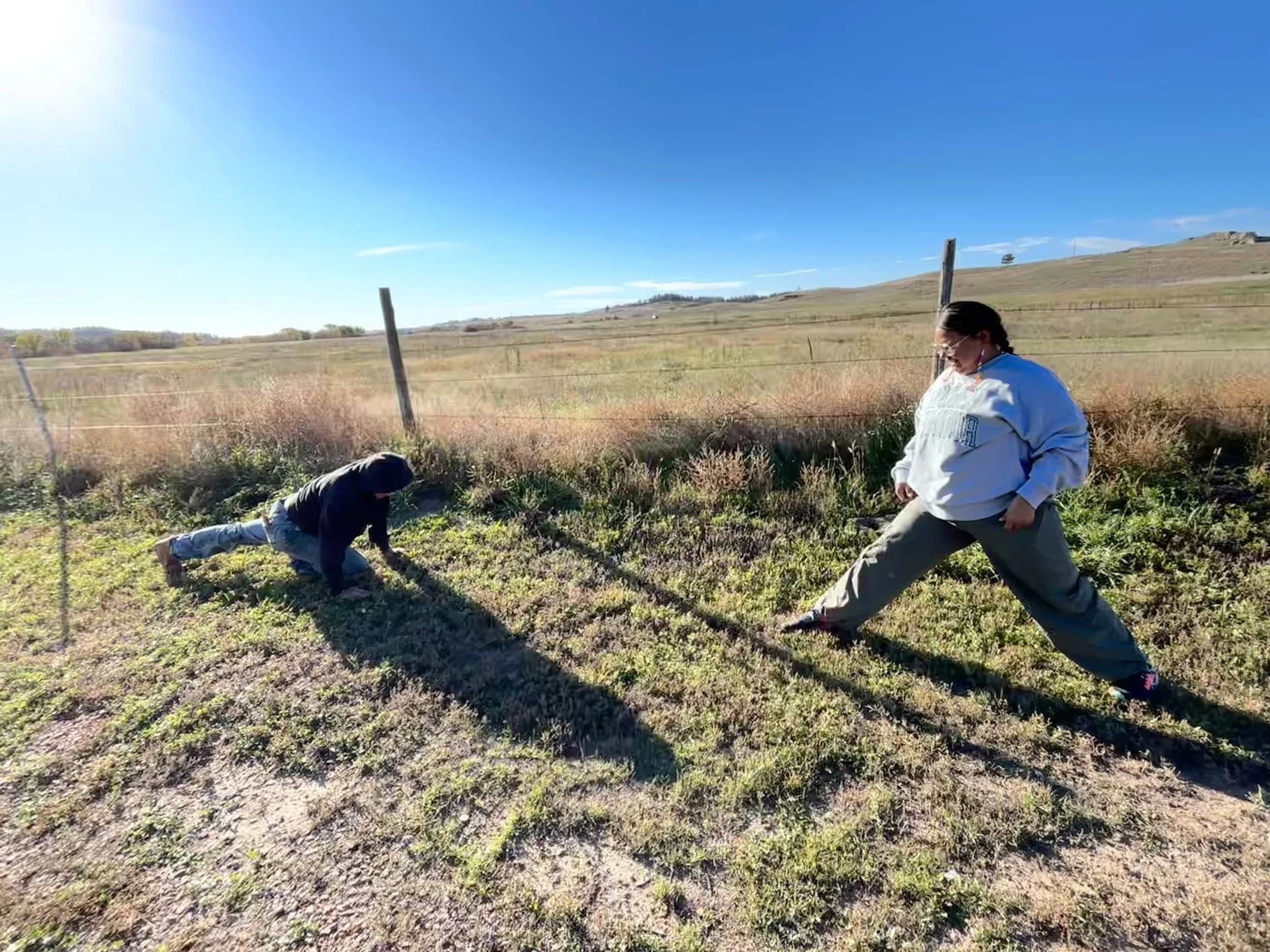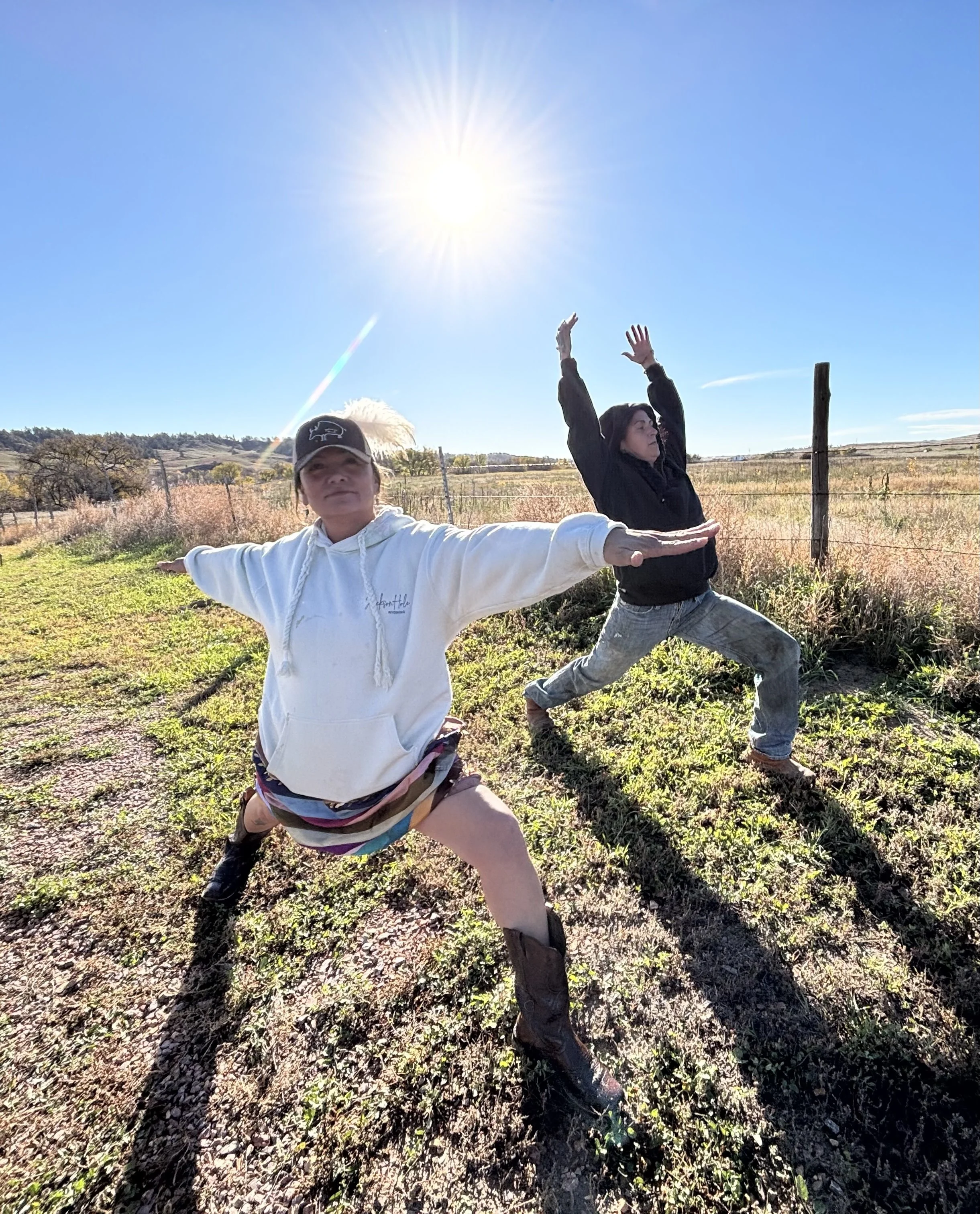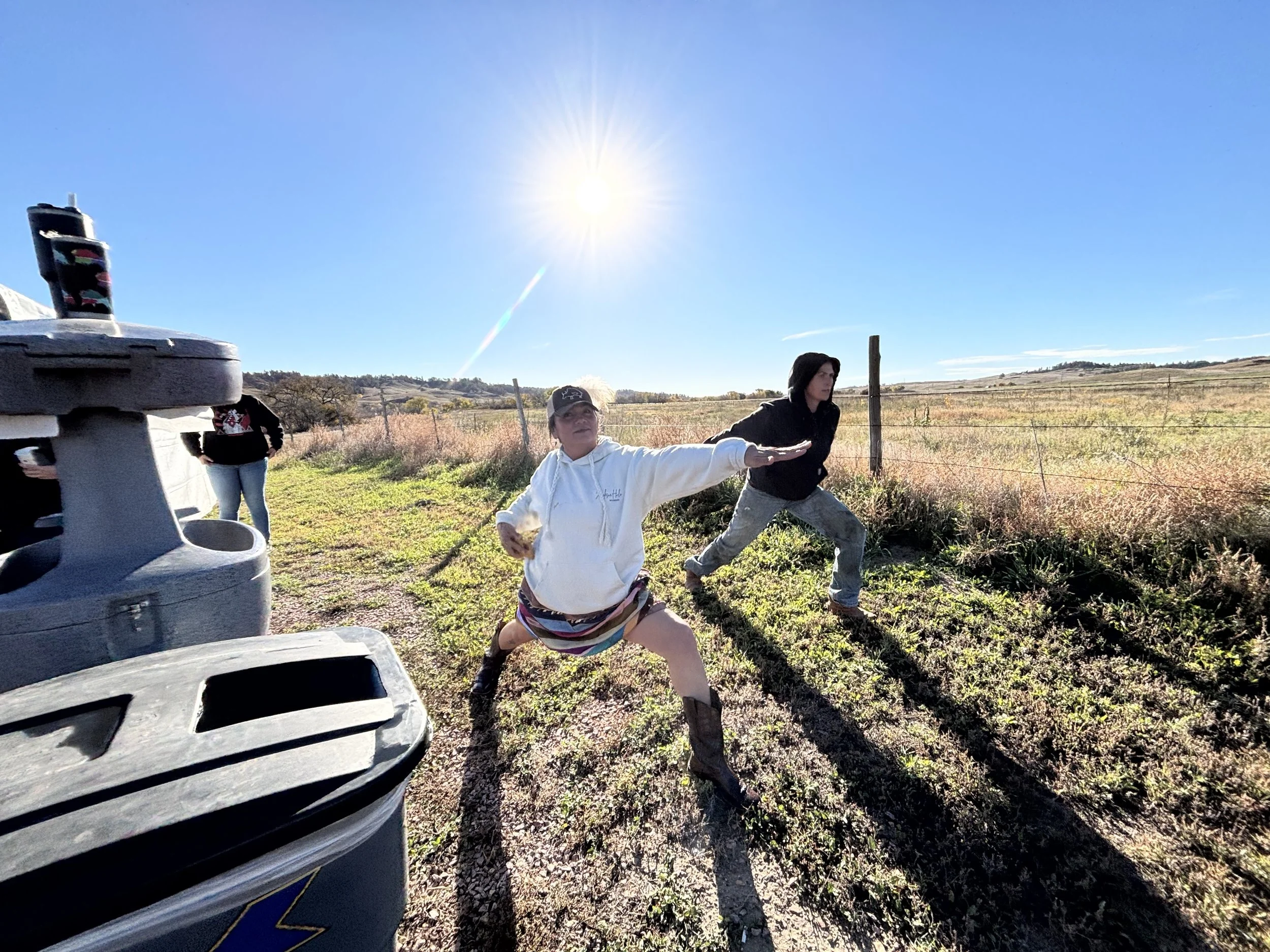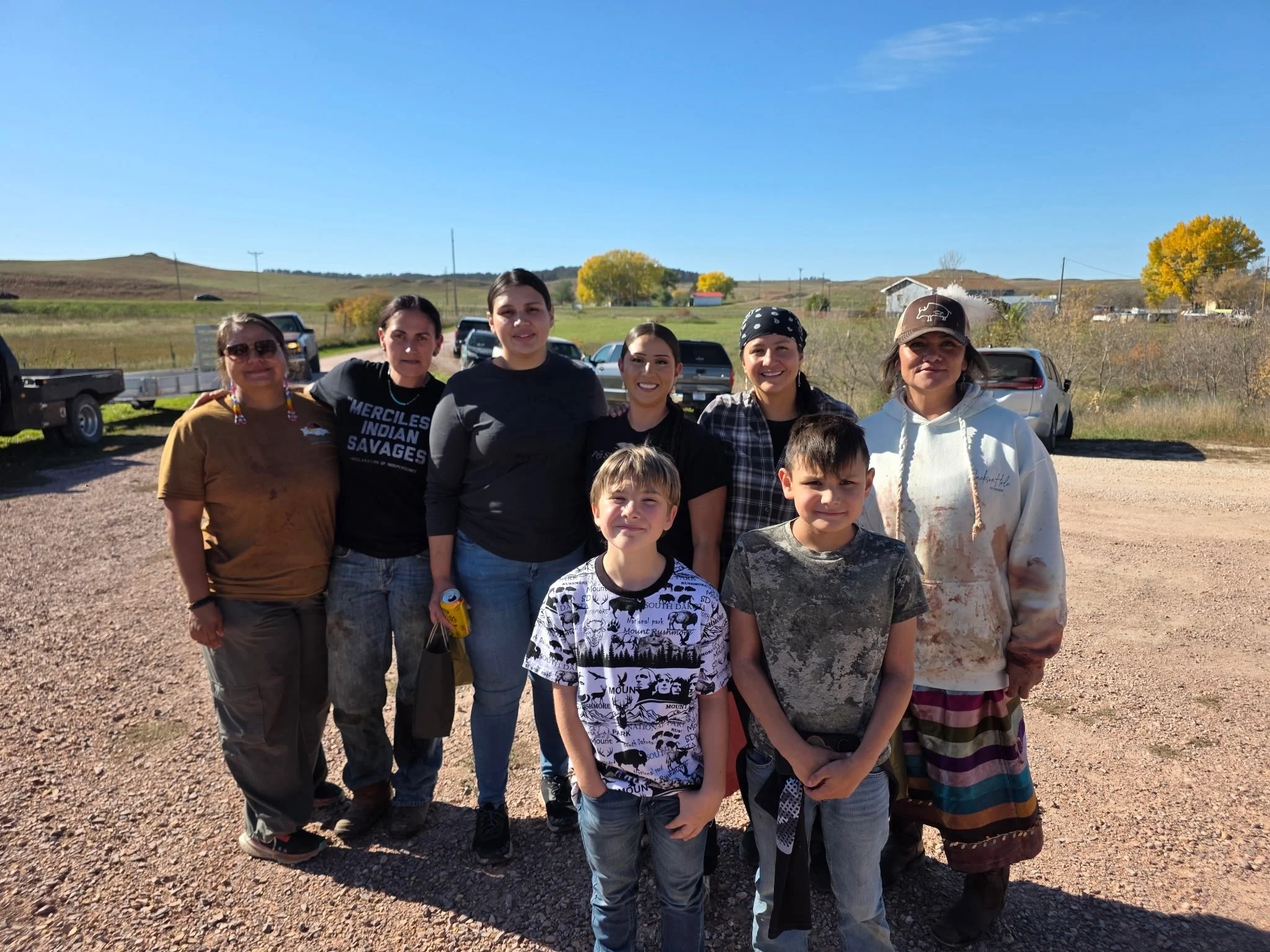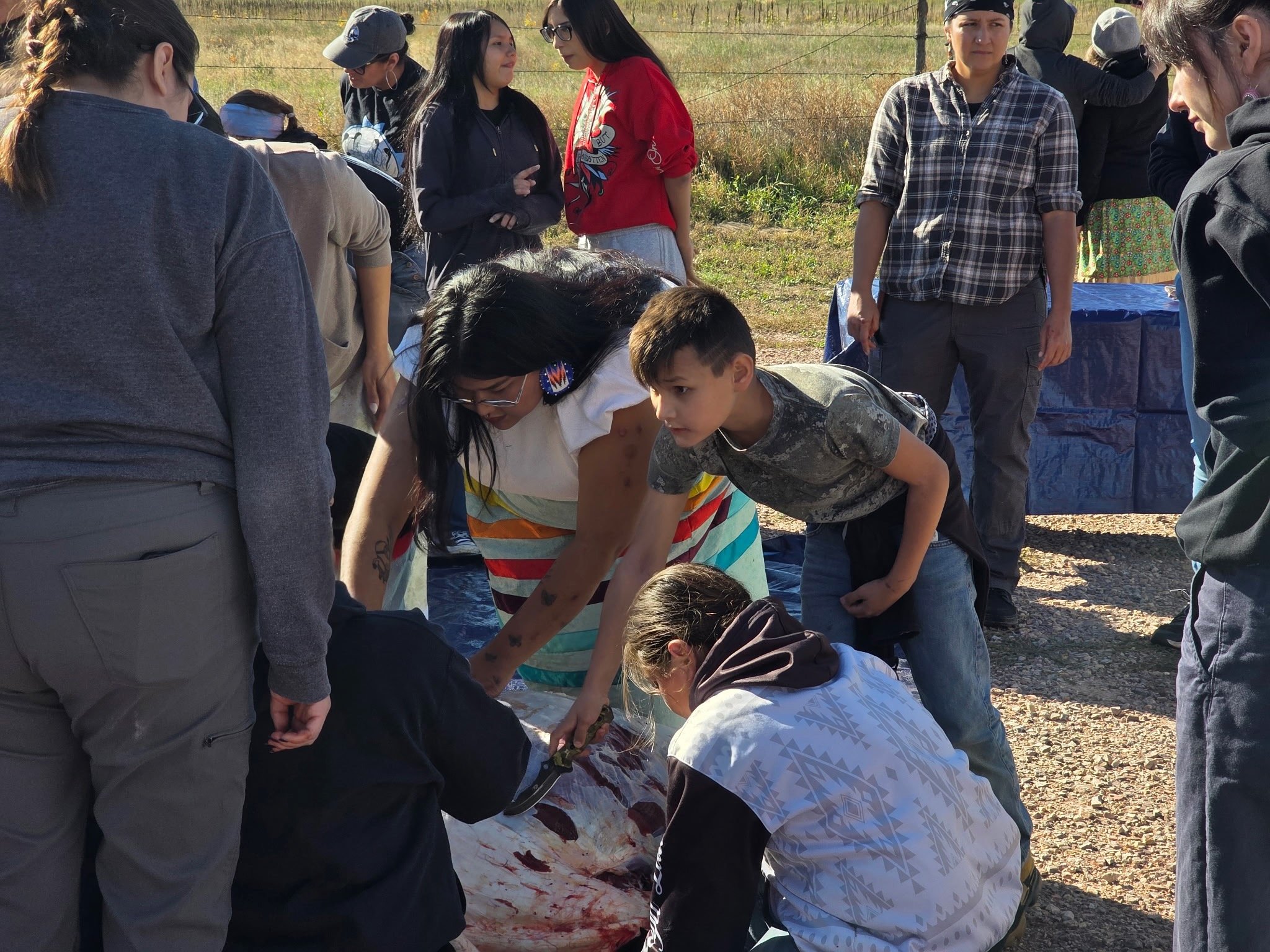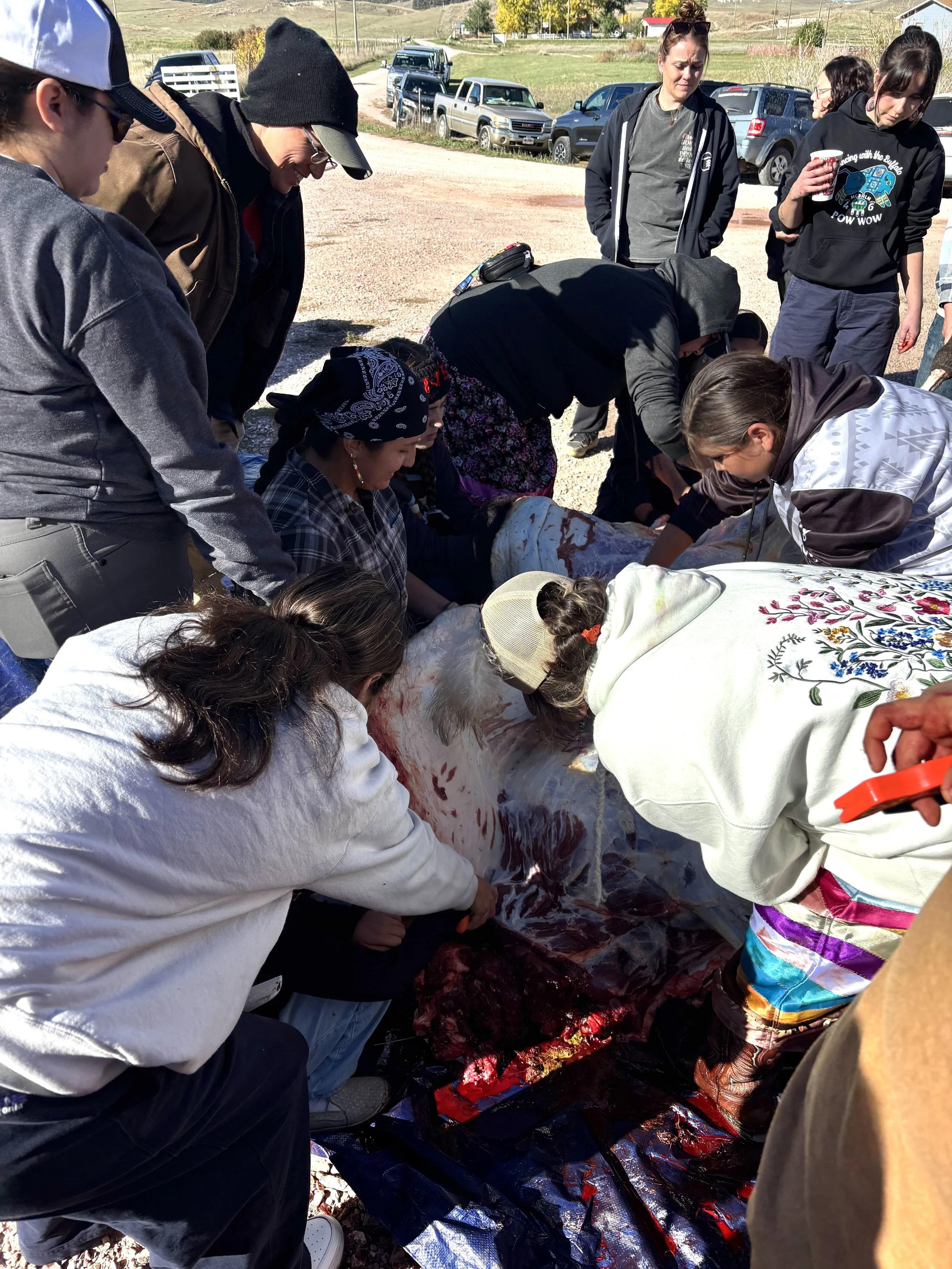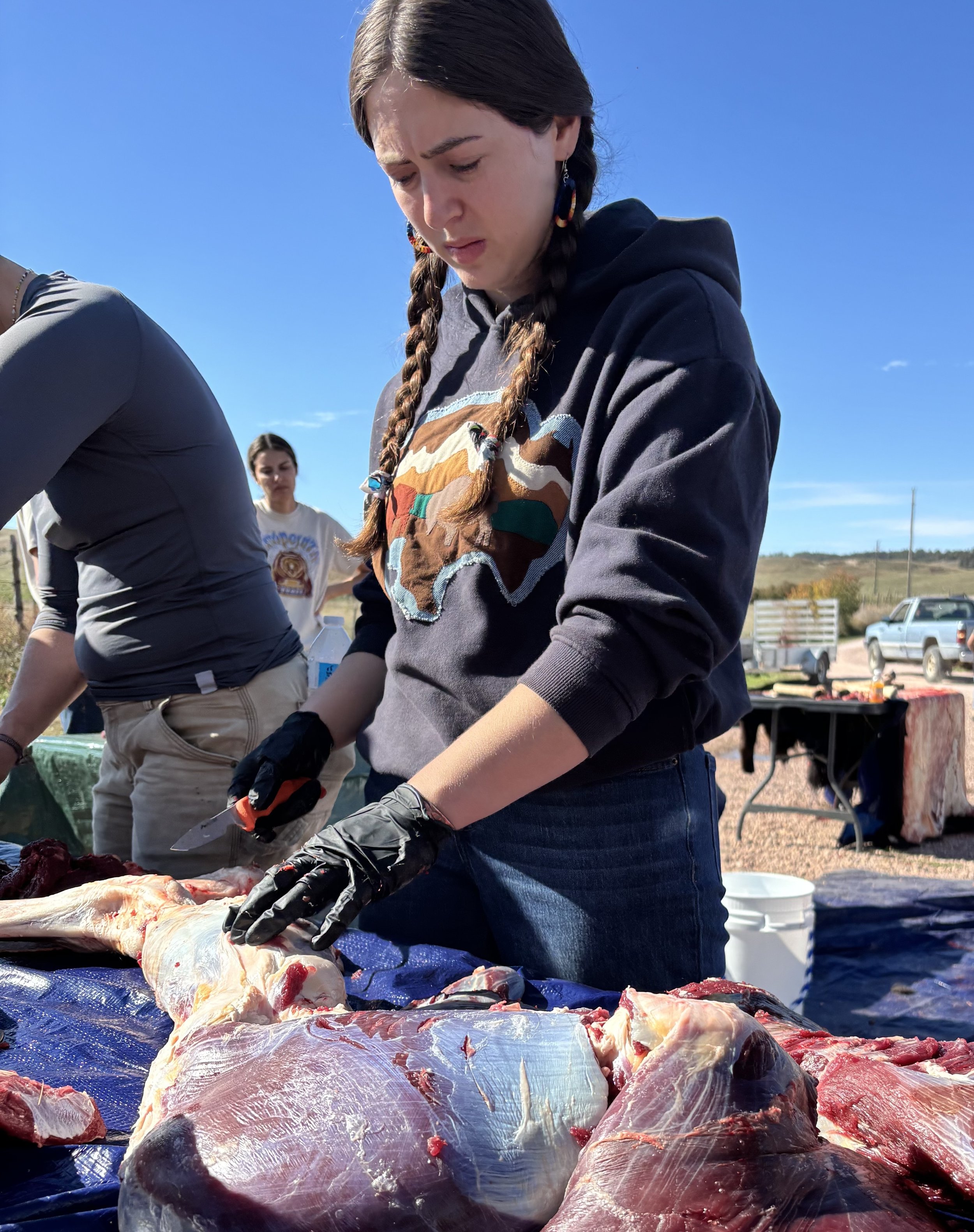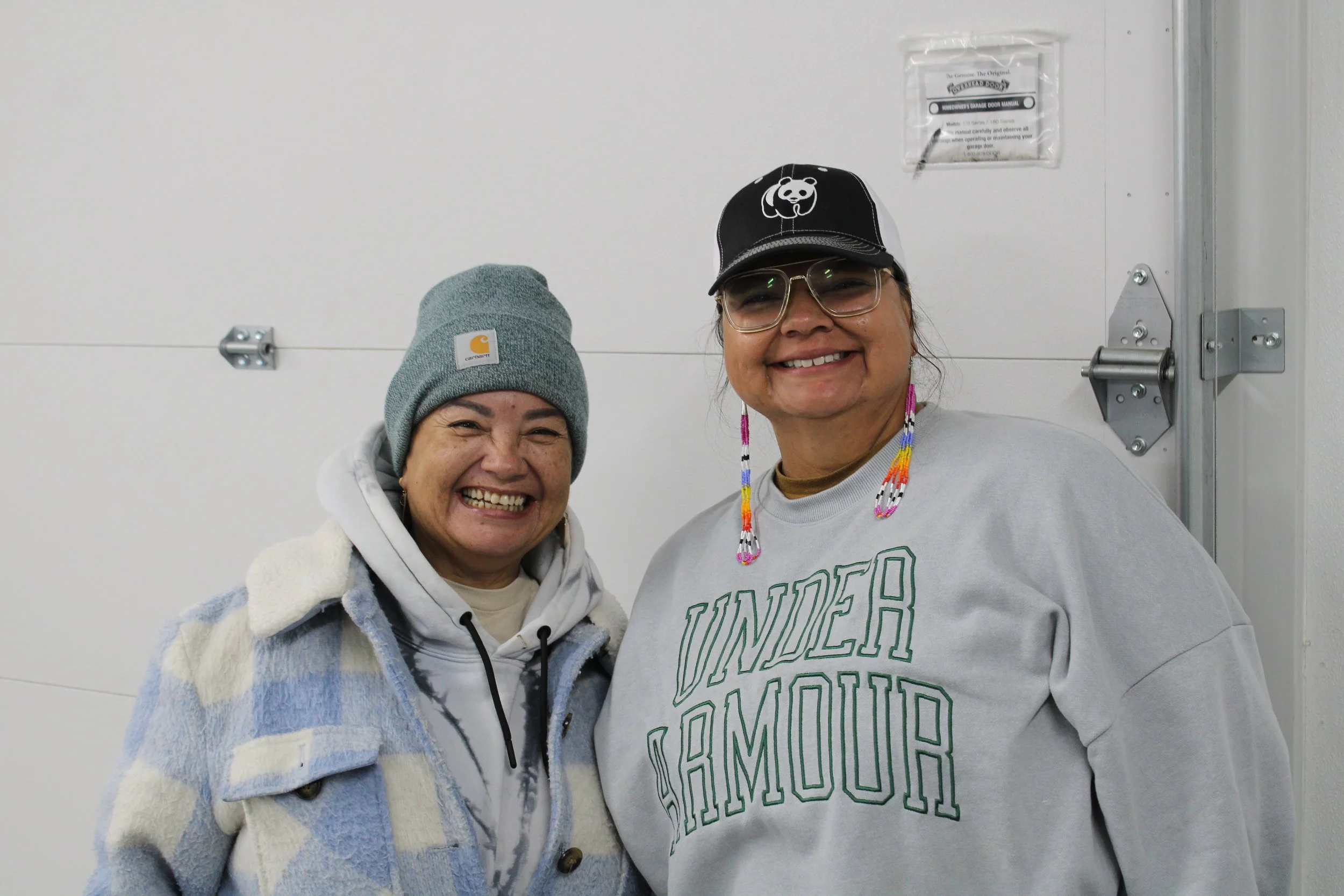
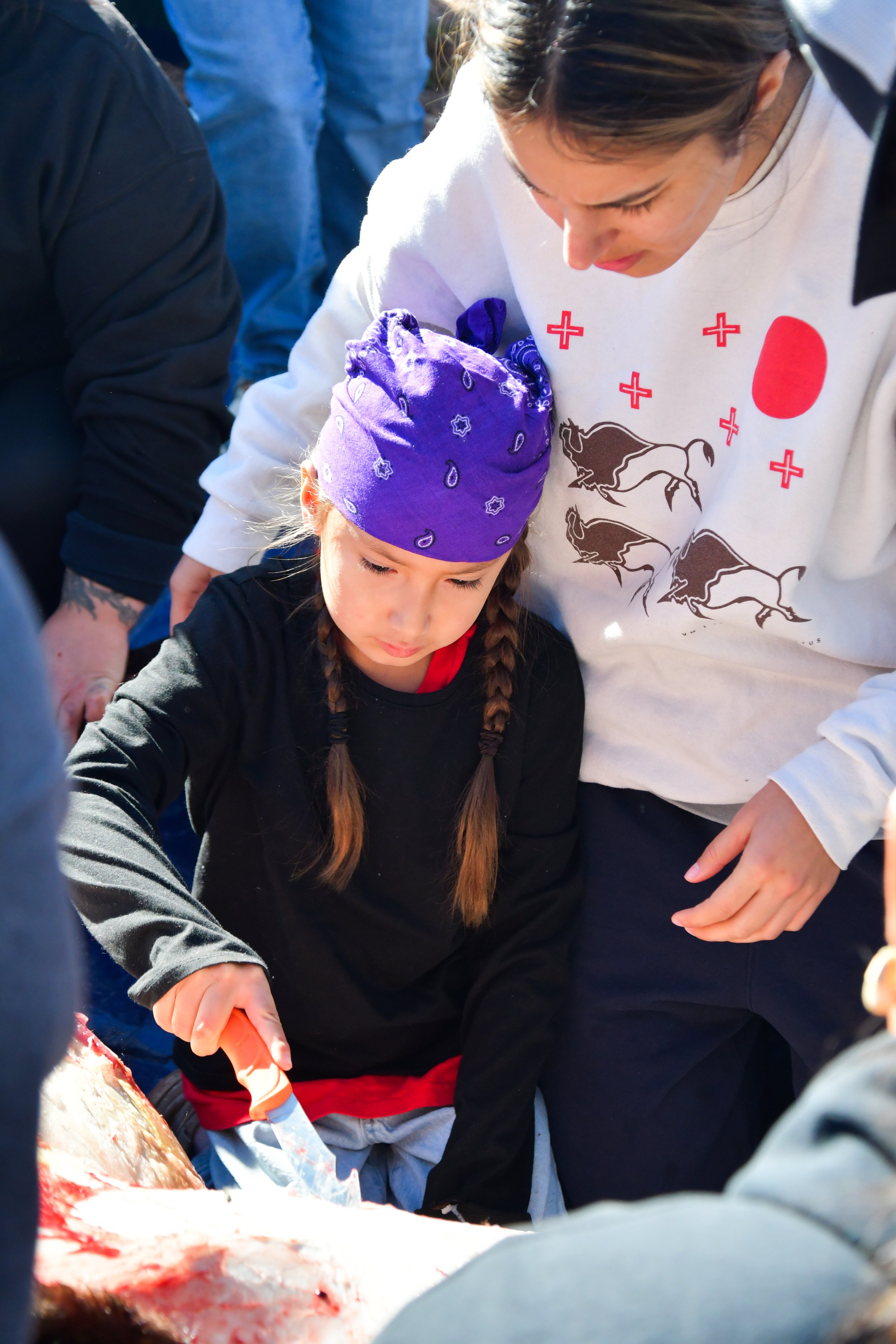
Youth participates in cultural harvest.
Correction: An earlier version of this story did not correctly identify the leadership of the harvest. Summer Afraid of Hawk (Cheyenne River Sioux Tribe) led the harvest, alongside a team of women that included Patti Harris and Irona Howe. We regret the error.
The land and the people gathered upon it were silent as anticipation mounted.
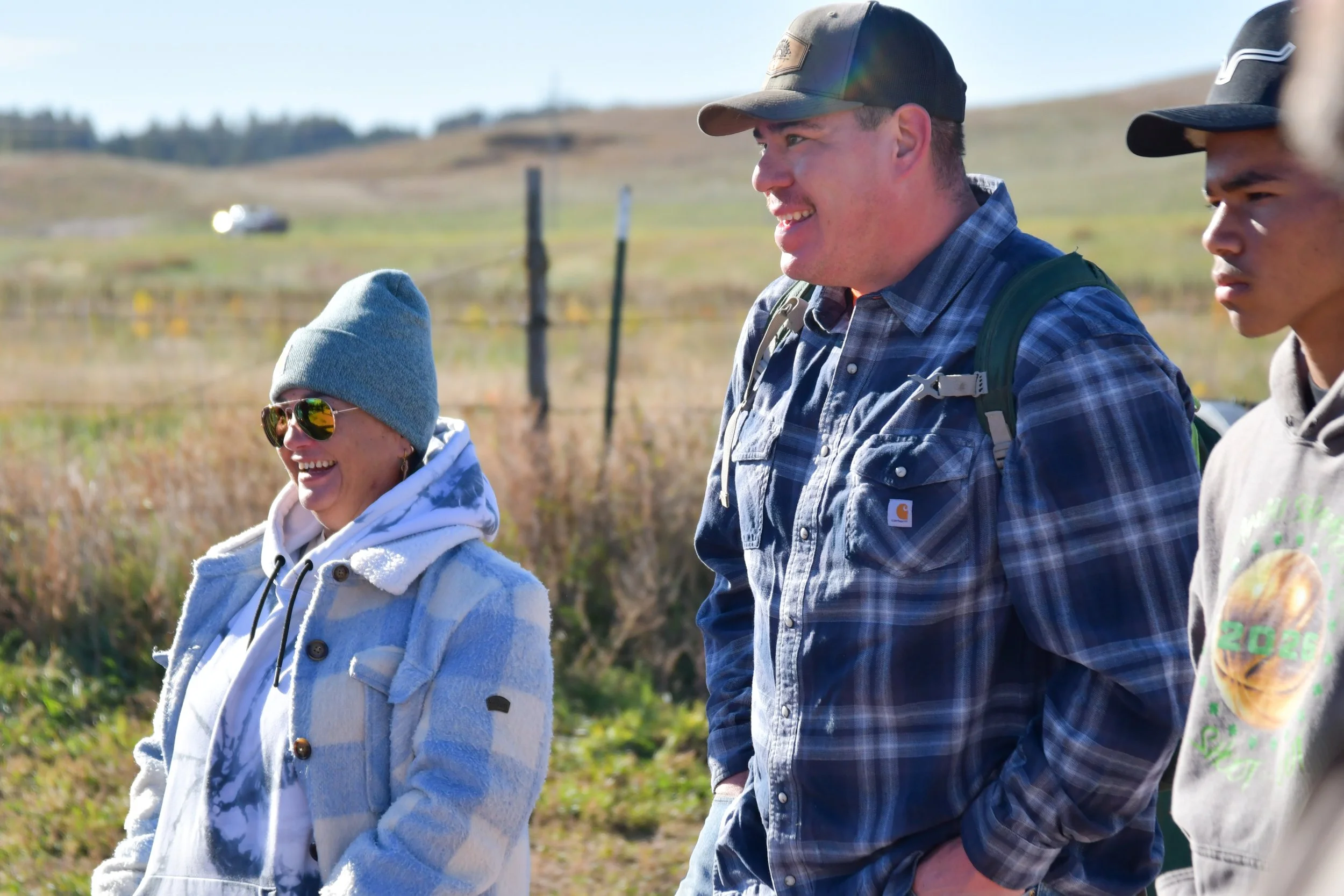
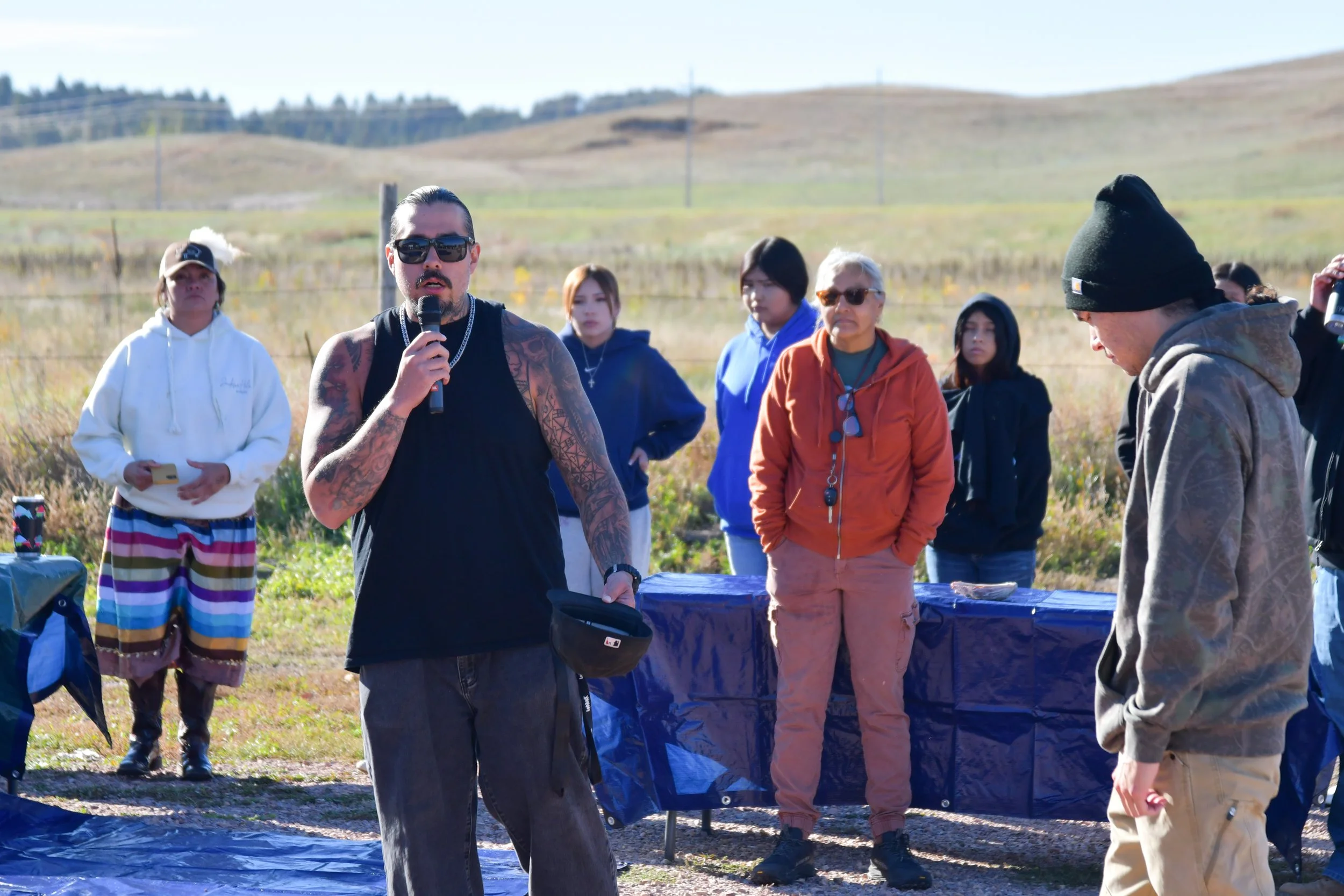
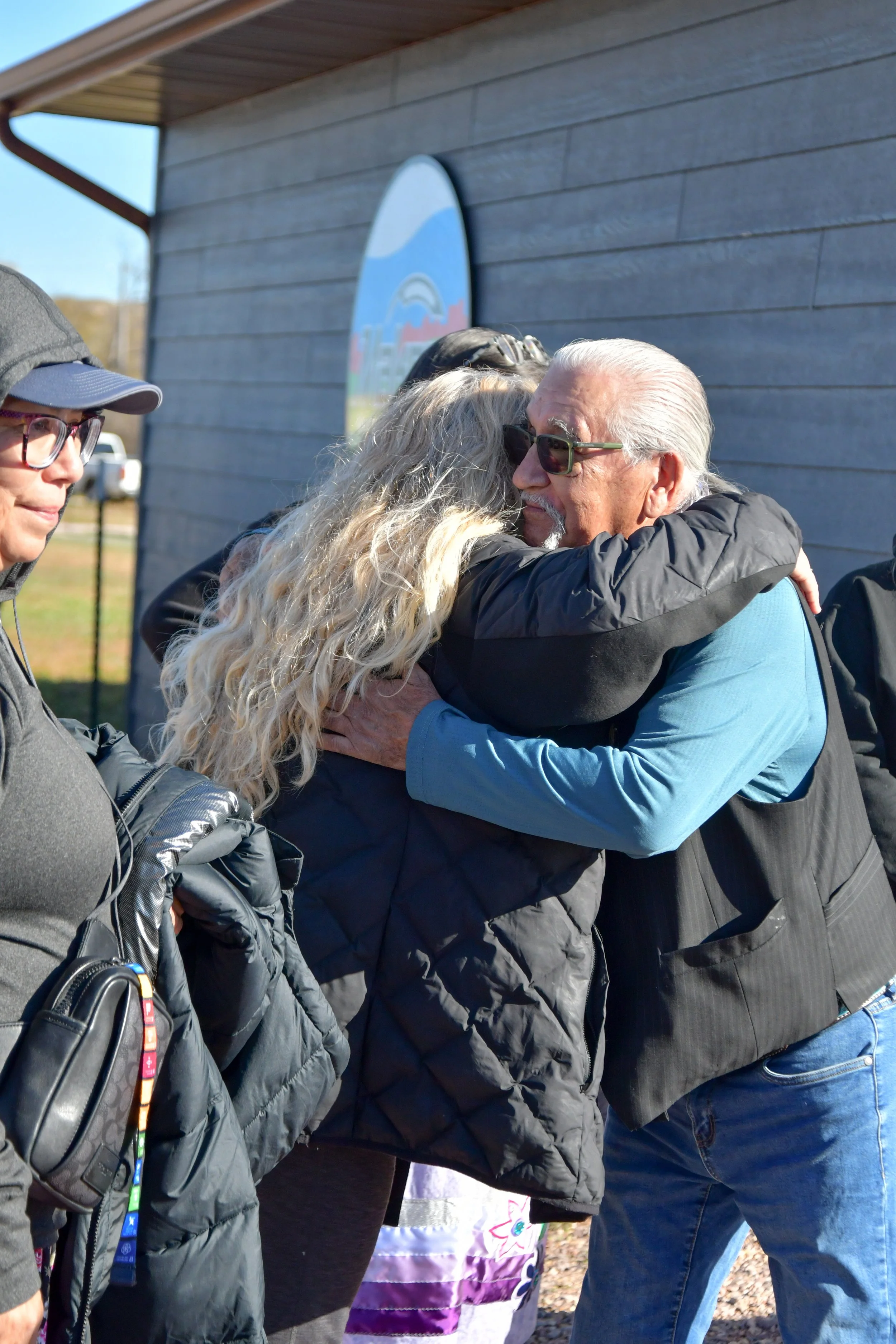
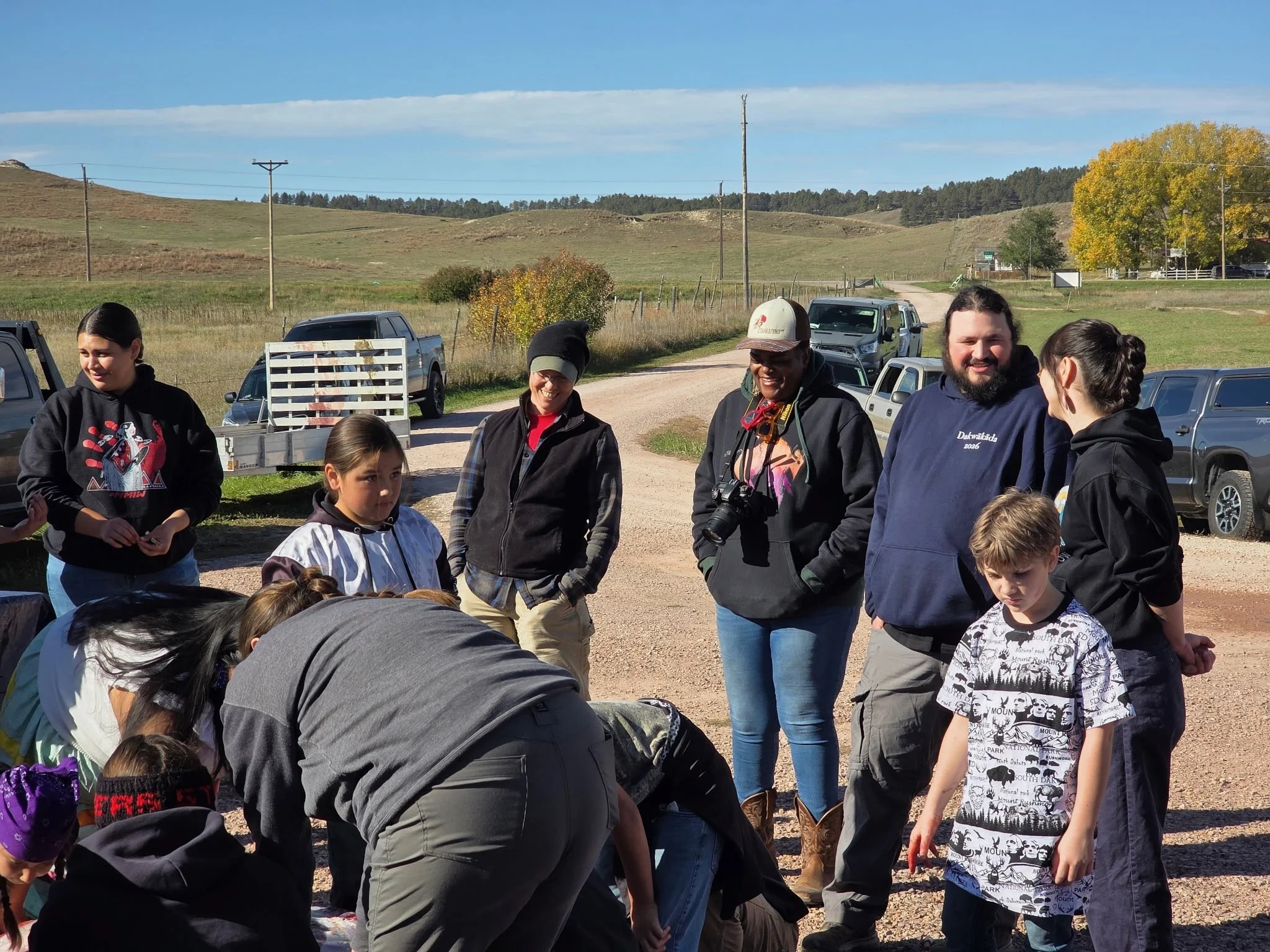
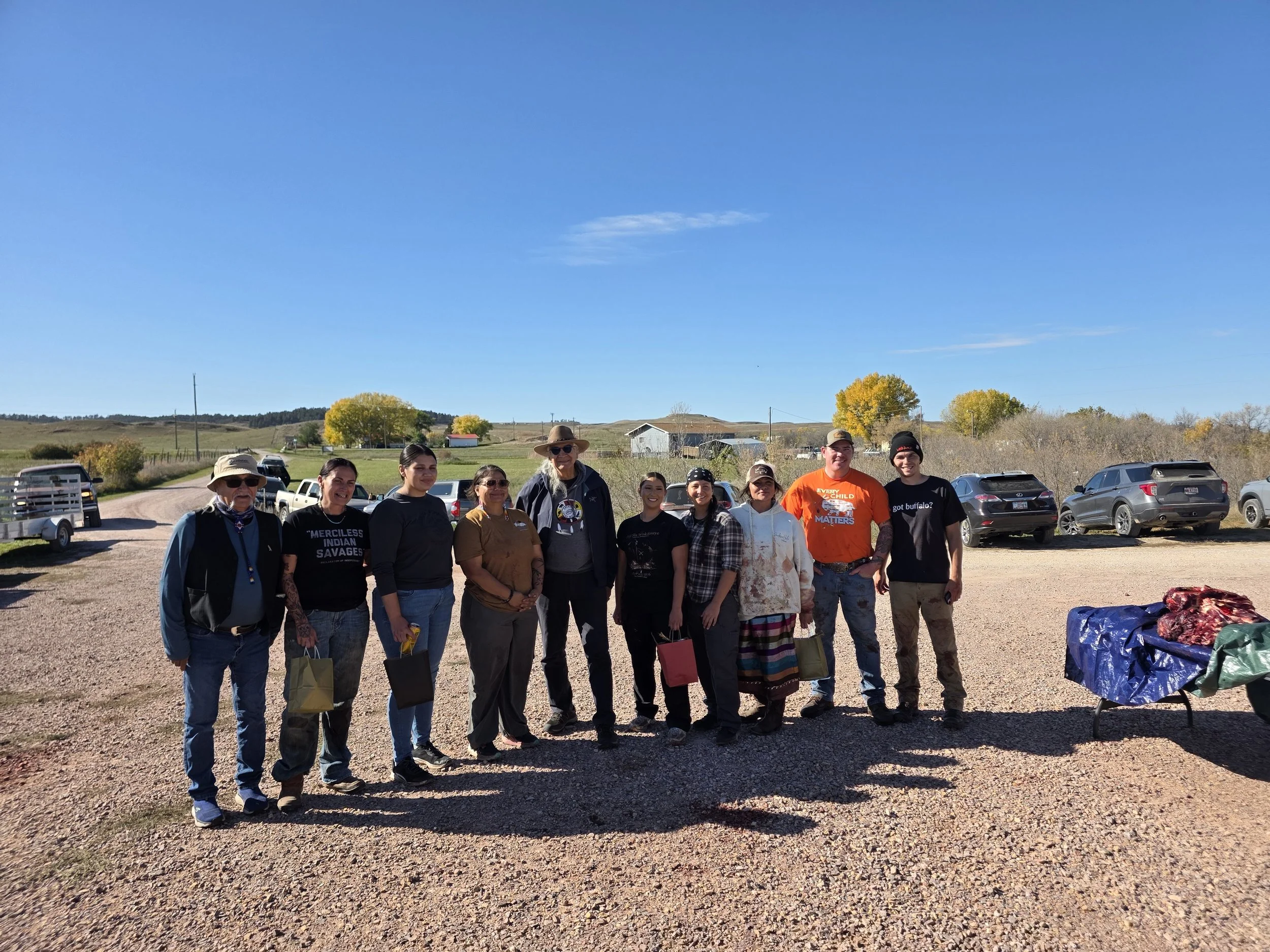
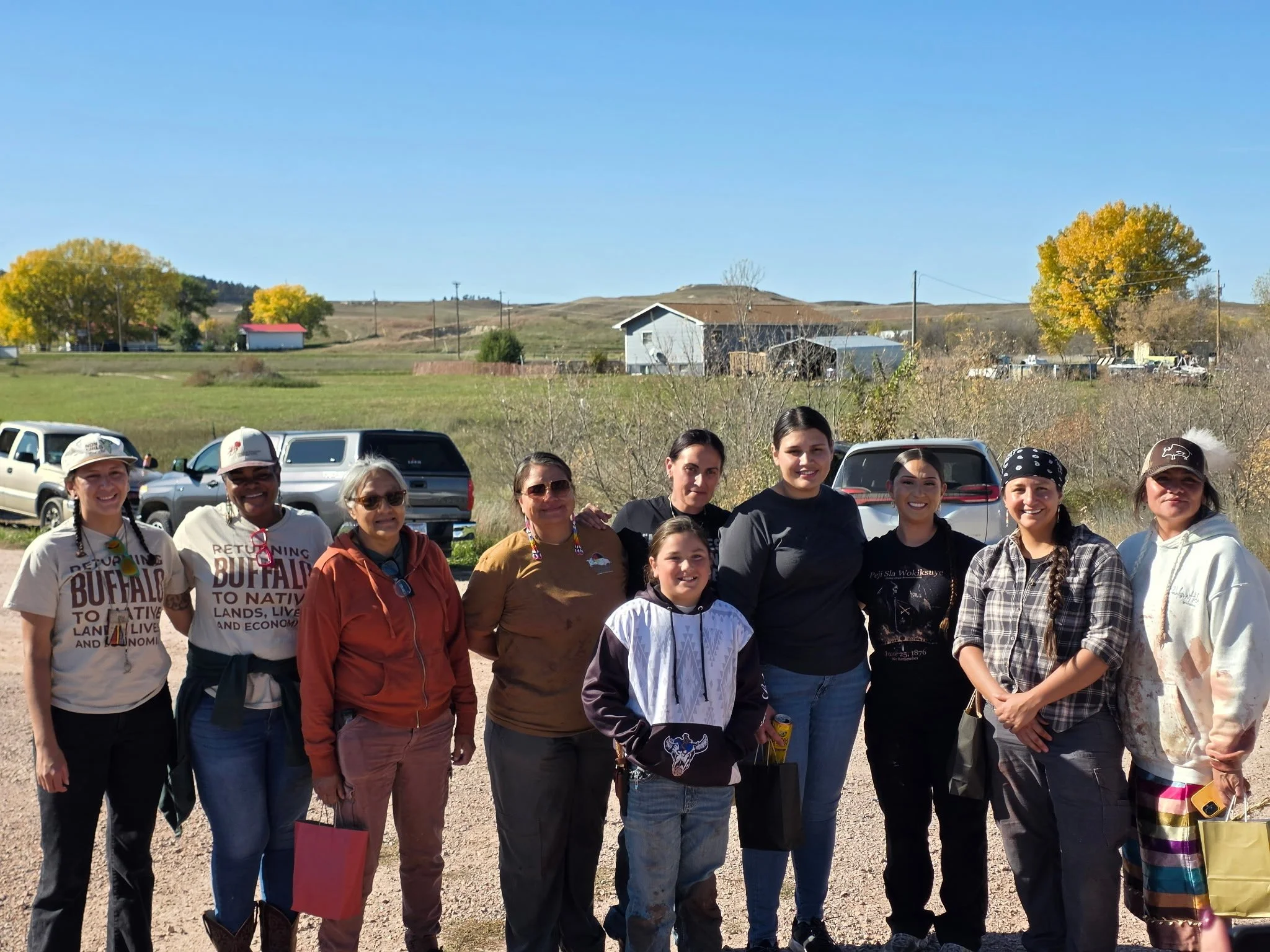
At the Makoce Cultural Kitchen in Porcupine, South Dakota, the gathering was intentionally small to respect the day’s ceremonial importance. The 75 people present, including 30 youth, were First Nations dignitaries and University of Saskatchewan students, local youth from schools on the Pine Ridge Reservation, Elders and Buffalo restoration supporters.
The drum began as the truck slowly pulled onto the property, towing a trailer carrying the Buffalo. As the truck stopped, the singing turned to prayers and acknowledgments honoring this gift, while those gathered were ceremonially smudged with sage. Every action reflected the reverence and respect at the heart of a traditional Buffalo harvest.
Hosted by Tanka Fund, the harvest opened a week of events in He Sapa (the Black Hills) celebrating the 12th anniversary of the Buffalo Treaty. Tanka Fund also co-hosted the anniversary gathering with the Oglala Sioux Tribe, the International Buffalo Relations Institute and NDN Collective.
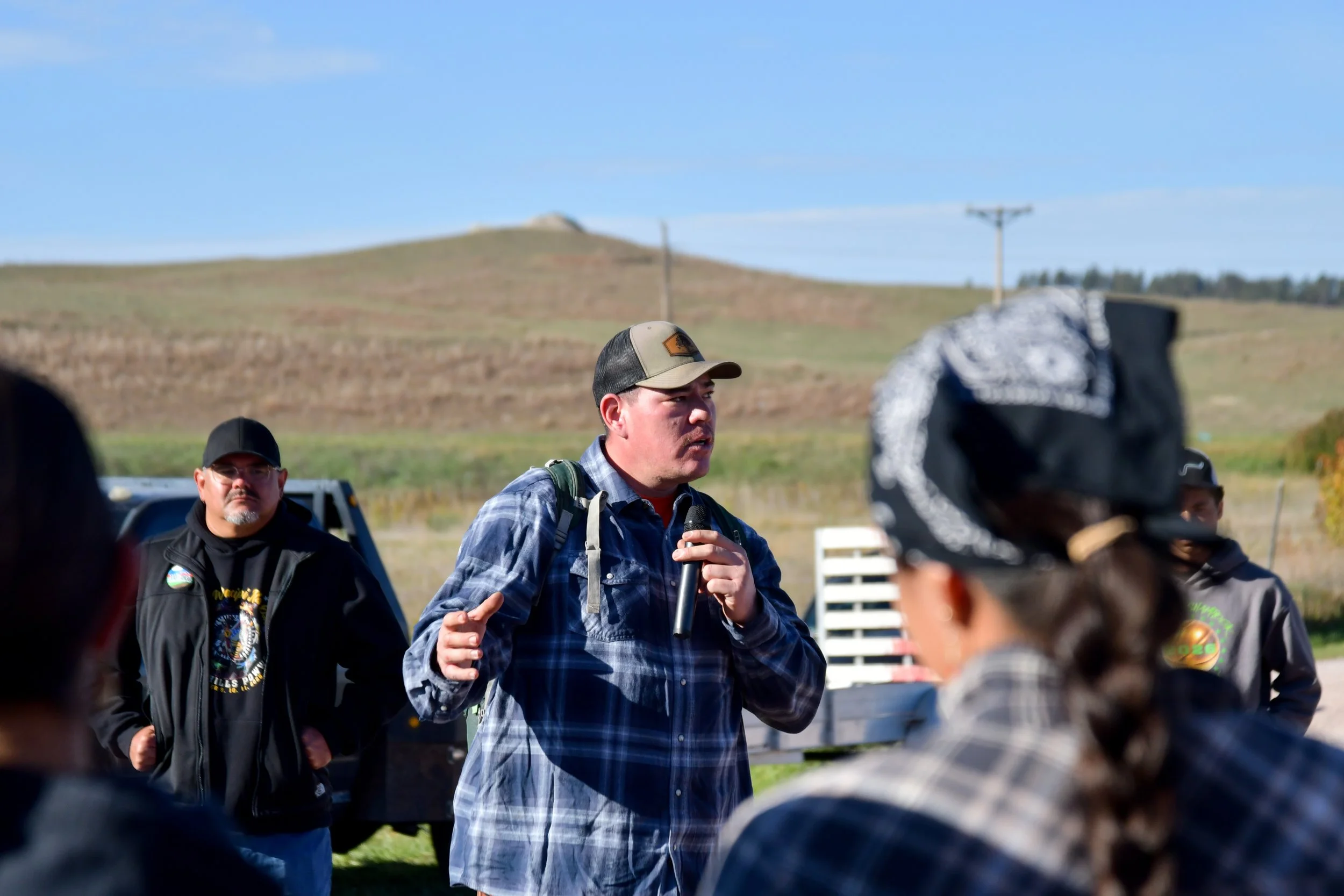
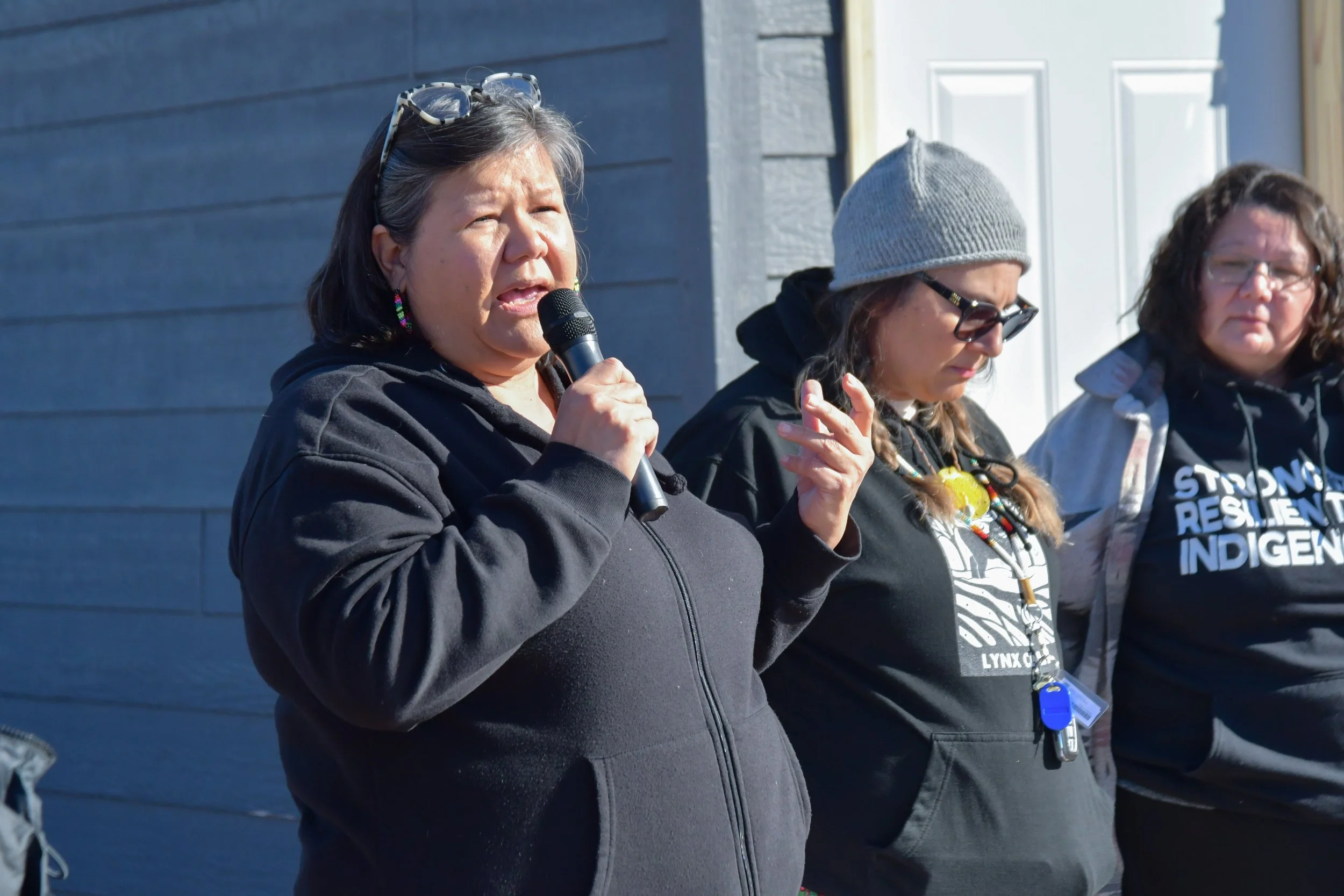
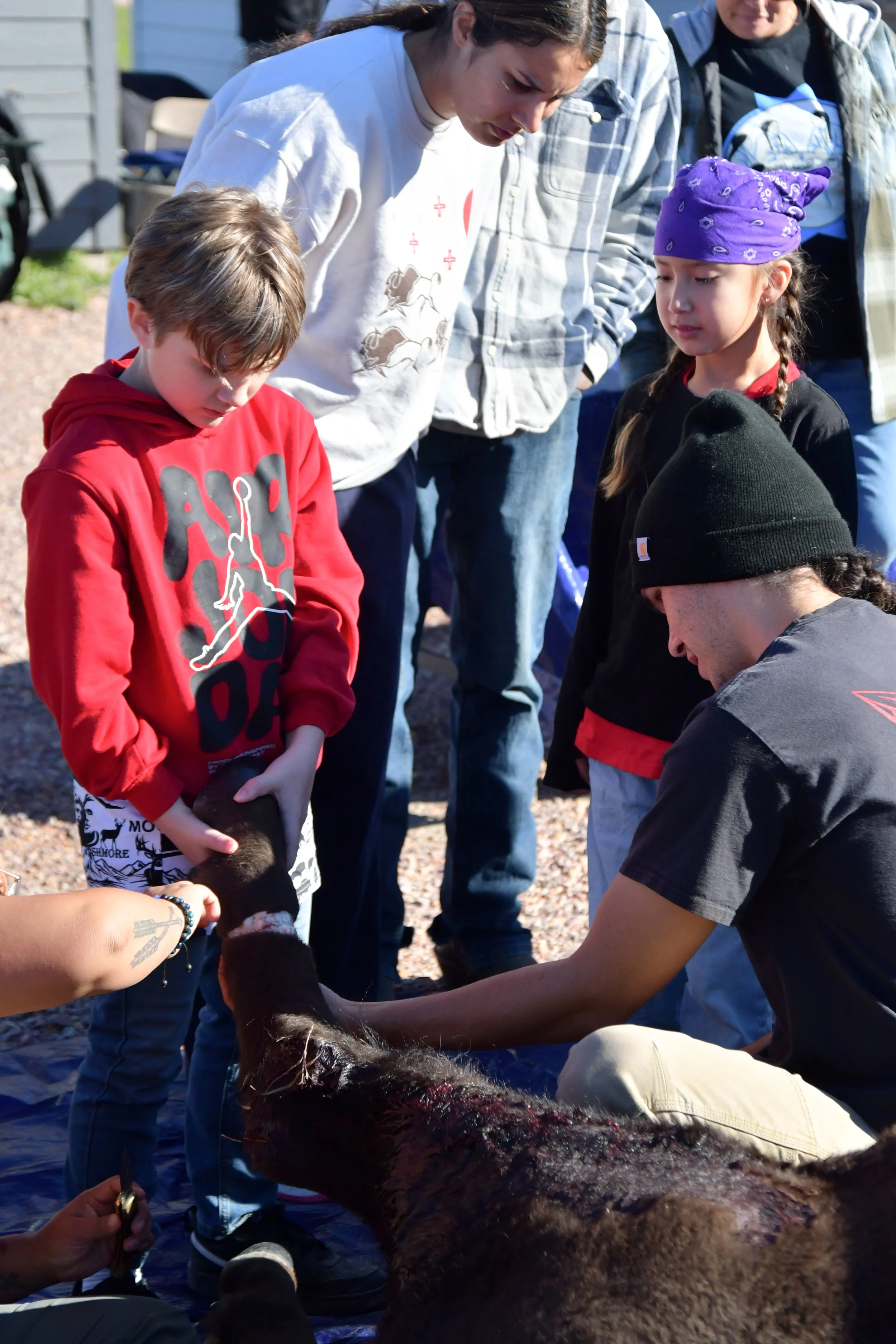
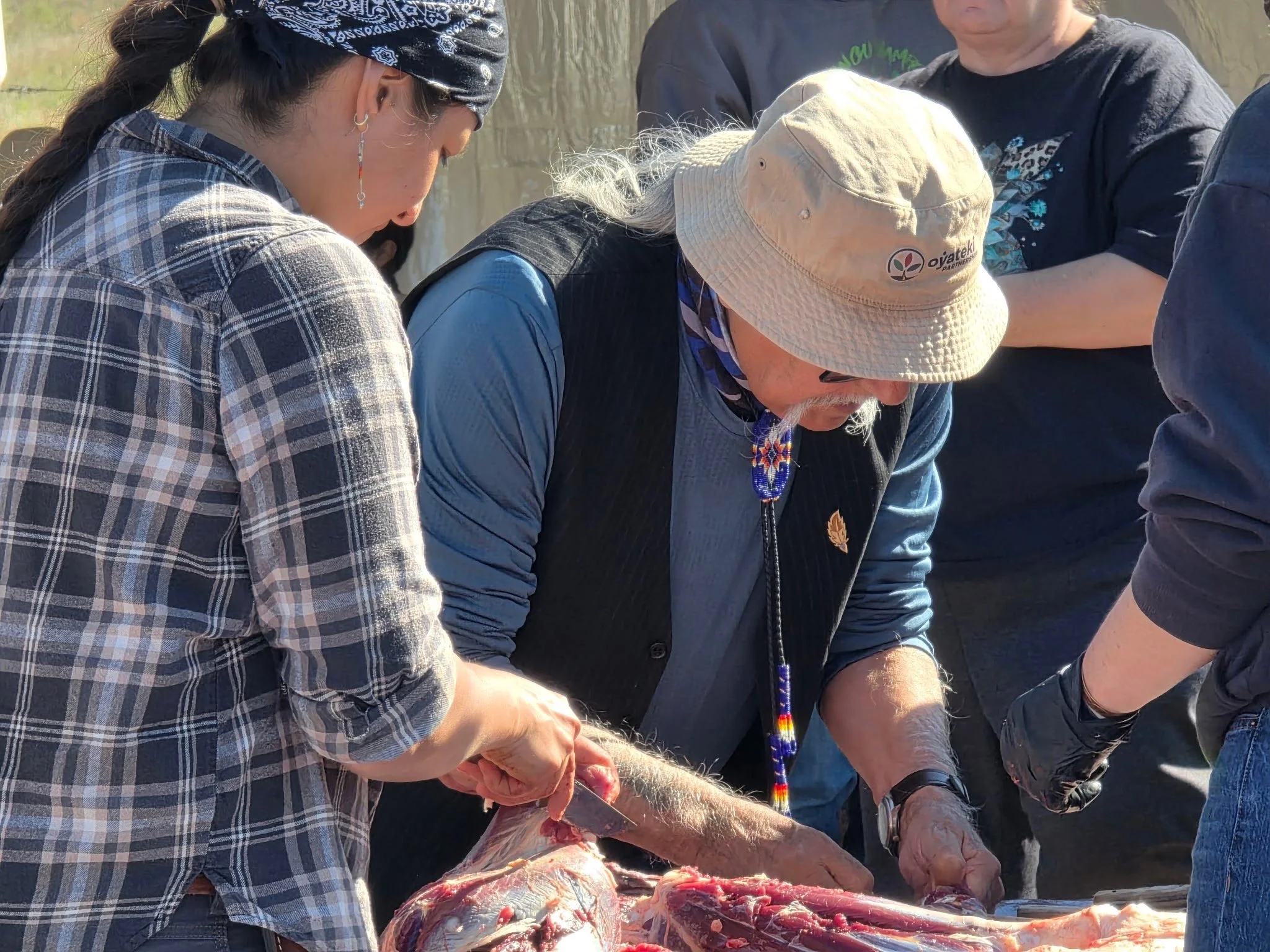
The harvest’s leadership reflected the matriarchal structure of a Buffalo herd. Summer Afraid of Hawk (Cheyenne River Sioux Tribe) led the harvest, guiding the harvesters through the process alongside a team of women that included Patti Harris (Northern Arapaho Tribe and Northern Paiute Tribe) and Irona Howe (Lakota Sioux Tribe). They encouraged everyone to participate, learn about the different parts of the Buffalo and understand the medicine the relative provides. Tanka Fund Buffalo Restoration Director Gusti Rattling Hawk (Oglala Lakota) was also on hand to offer instruction.
The significance of the harvest extended beyond the ceremony and the work itself. Among those gathered were First Nations Elders, dignitaries and students who had traveled from Canada, crossing what is often called the “Medicine Line,” the border between the United States and Canada. While that border separates Native Nations geographically, the cultural relationships and teachings surrounding Buffalo extend well beyond it.
For one Cree Elder, the journey to Lakota territory was an opportunity to carry knowledge home. He said he had arrived with nothing and hoped to return to his homeland with teachings from the experience.
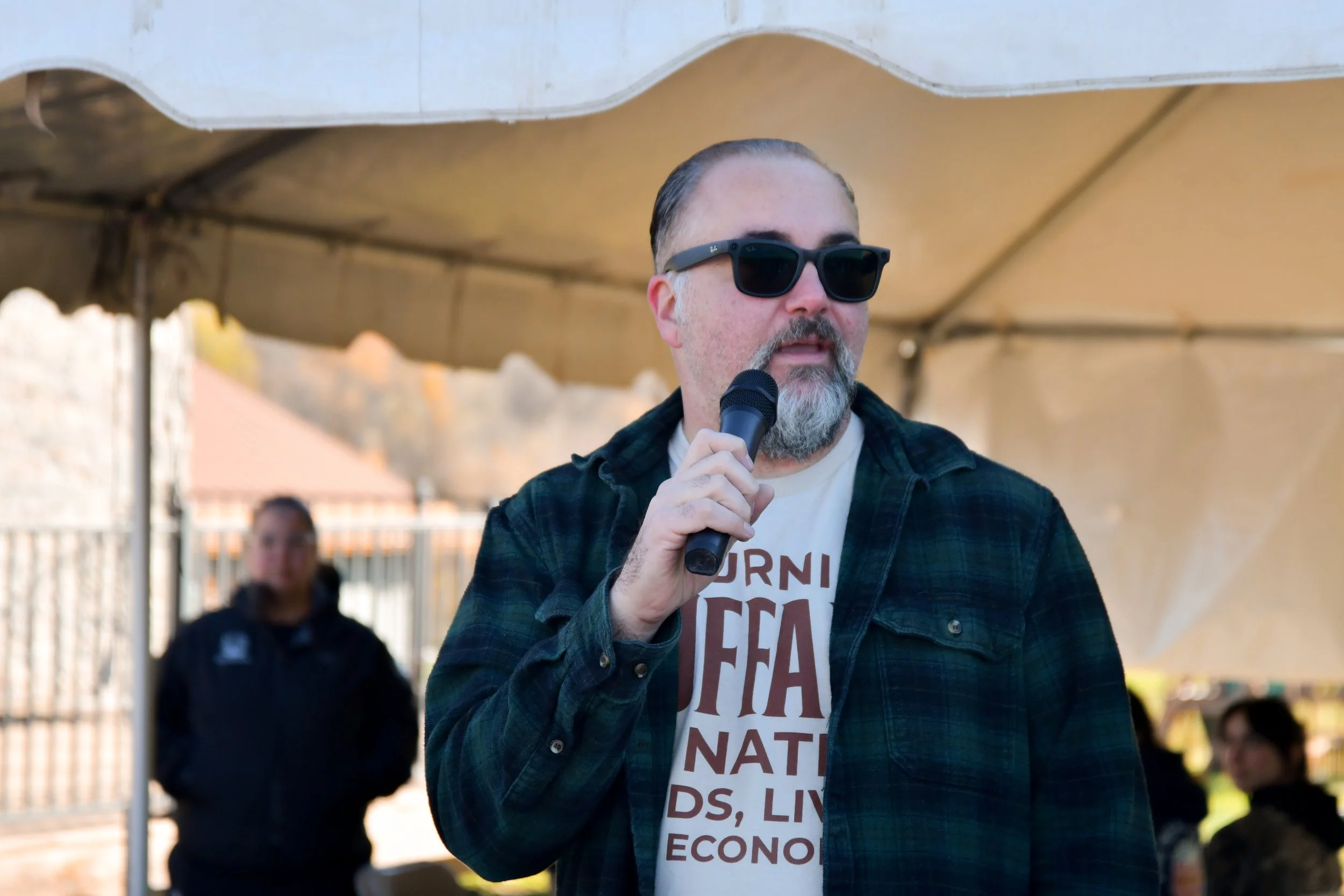
Tanka Fund Executive Director Dawn Sherman (Lakota, Shawnee, and Delaware) spoke about the role Buffalo continue to play in bringing Native Nations together across borders.
“Harvests like this draw nations together and strengthen our collective community,” she said.
For Sara Fontaine, a University of Saskatchewan student from Sagkeeng First Nation in Manitoba, the harvest offered both a chance to learn and a sense of solidarity.
One of the most powerful experiences for Sara was seeing women lead the harvest, with men there to support them. She said this work can feel isolating as a woman, particularly when so much energy goes into convincing others of its importance. At the harvest, she found herself surrounded by people who already shared that commitment.
She was also moved by how many families can be fed through Buffalo restoration and traditional harvests.
“I just came home feeling very empowered and motivated from seeing that and being around likeminded people,” she said.
For Monica Rattling Hawk (Oglala Lakota), Tribal liaison specialist for Native Nations Conservation and Food Systems at World Wildlife Fund, the significance of the harvest was deeply connected to knowledge passed through generations. A longtime advocate for Buffalo restoration, Monica also played a key role in planning the Buffalo Treaty’s 12th anniversary and bringing the gathering to the Oglala Sioux Tribe.
She emphasized the importance of placing the matriarch back into the circle and recognizing the knowledge carried through traditional practices.
“The knowledge shared was taught from the Buffalo itself. Always practical and always communicated through a process,” she said. “In this case, the healing stories are shared, as the matriarch is the caretaker. The cuts for drying or preserving are known, and ‘food is medicine’ is established because of matriarchal knowledge and being back on the circle.”
That knowledge is not limited to the physical act of processing a Buffalo. For Monica, a traditional harvest provides what she describes as “a relational knowledge,” connecting the people, the land, the medicines and the Buffalo itself.
“It brings all the ecosystems to the harvesters. It brings the medicines and the pipe, the ceremony of prayer, and communication to relatives,” she said. “Youth are able to relate to the connections to the land and connect the dots — to see, to feel, to hear how all parts of the harvest are for a reciprocal purpose. It simply puts us all with the herd and the ecosystem, with an explanation of how relationships work.”
Throughout the harvest, people of all ages and experience levels put those teachings into practice, working alongside one another to process the Buffalo. For those who had traveled from Canada, the gathering was a chance to learn alongside Lakota harvesters, sharing an experience rooted in cultural knowledge and relationships that transcend national borders.
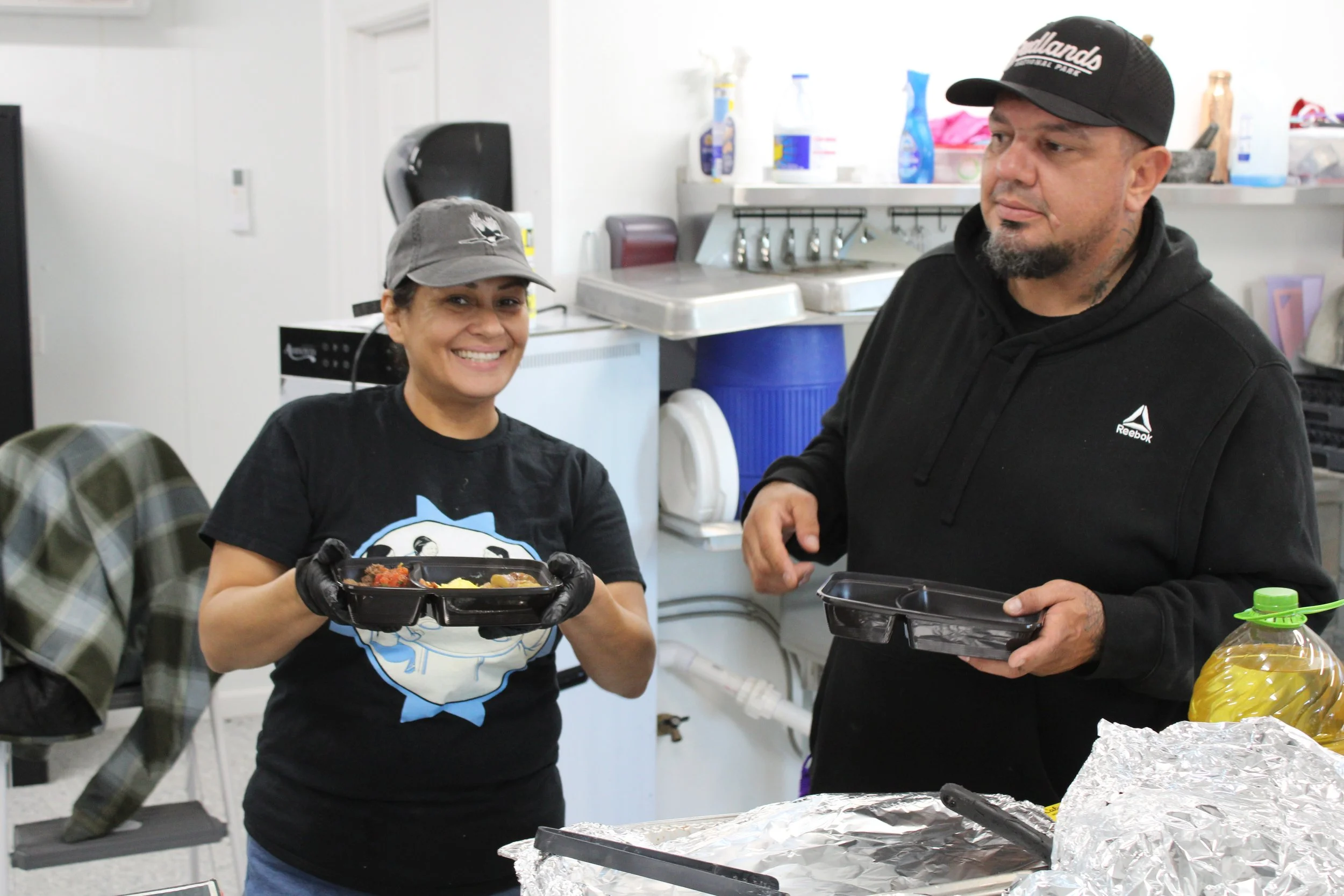
The harvested meat, prepared by local traditional cooks at The Hangry Buffalo, was later served at the Buffalo Treaty signing at Crazy Horse Memorial. From the arrival of the Buffalo to the meals shared later that week, the harvest was a collective effort.
Tanka Fund Technical Service Provider Tyler “TJ” Heinert (Rosebud Sioux Tribe) served as the WawókiyA, a Lakota term for someone who helps the people. In this role, TJ was responsible for bringing the Buffalo relative to the Oyáte (the people).
“Being selected or asked to be a provider for the Buffalo harvest is a high honor. Everything is done with the correct cultural protocols in place. This is meant to respect the Lakota way of life and the Buffalo relatives, in hopes to regain our connection,” TJ said. “Being able to share our skills and knowledge with others and the next generation is a great feeling. Teaching others how to process your own food is one of the greatest gifts. Getting the medicine from the buffalo relative, putting buffalo meat back into our diet is a goal for all of us.”
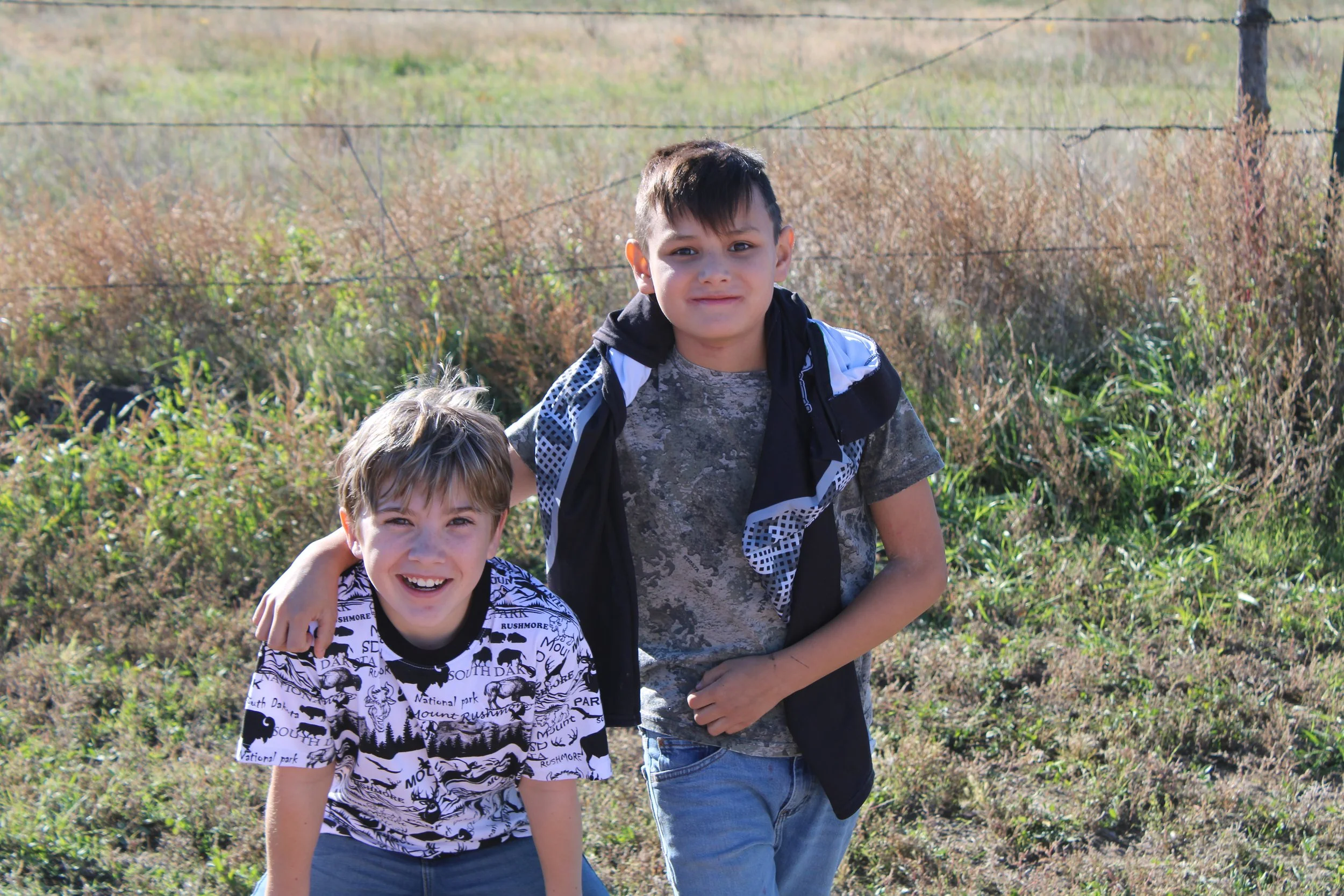
The next generation eagerly took in that knowledge through their own participation. Young harvesters approached their work with focus and determination, whether cleaning the hide or learning how to cut around the bone. Some spoke proudly about what they had accomplished, while others who first approached the process with hesitation eventually joined in without flinching.
Their experience stood in stark contrast to Monica’s childhood and the generations before her. Reflecting on the loss of access to Buffalo, she said her parents and grandparents “didn’t have the opportunity to eat good food, let alone see the relative running across the prairie.”
“I was well within my 40s by the time I was able to access bison meat,” she said.
Monica pointed to high rates of diabetes and cancer among Native peoples and the loss of connection to Unci Maka (Grandmother Earth) over generations.
For those who gathered in Porcupine, the harvest was a chance to restore some of those connections through shared work, cultural teachings, and relationships between Native Nations. The knowledge carried across the Medicine Line, the participation of young people, and the return of Buffalo to the table all reflected what restoration makes possible.
Monica described that significance in her own words:
“Today, to have the opportunity to harvest a bison traditionally, to pray, to be in the pasture, to see one offer himself to us, to feel the fur and the hide. To see and hear the stories of the past and how the Buffalo retains the story in its body. To reconnect, seeing that food is medicine — all of this is what makes a harvest important.”