Calving season is a testament of restoration
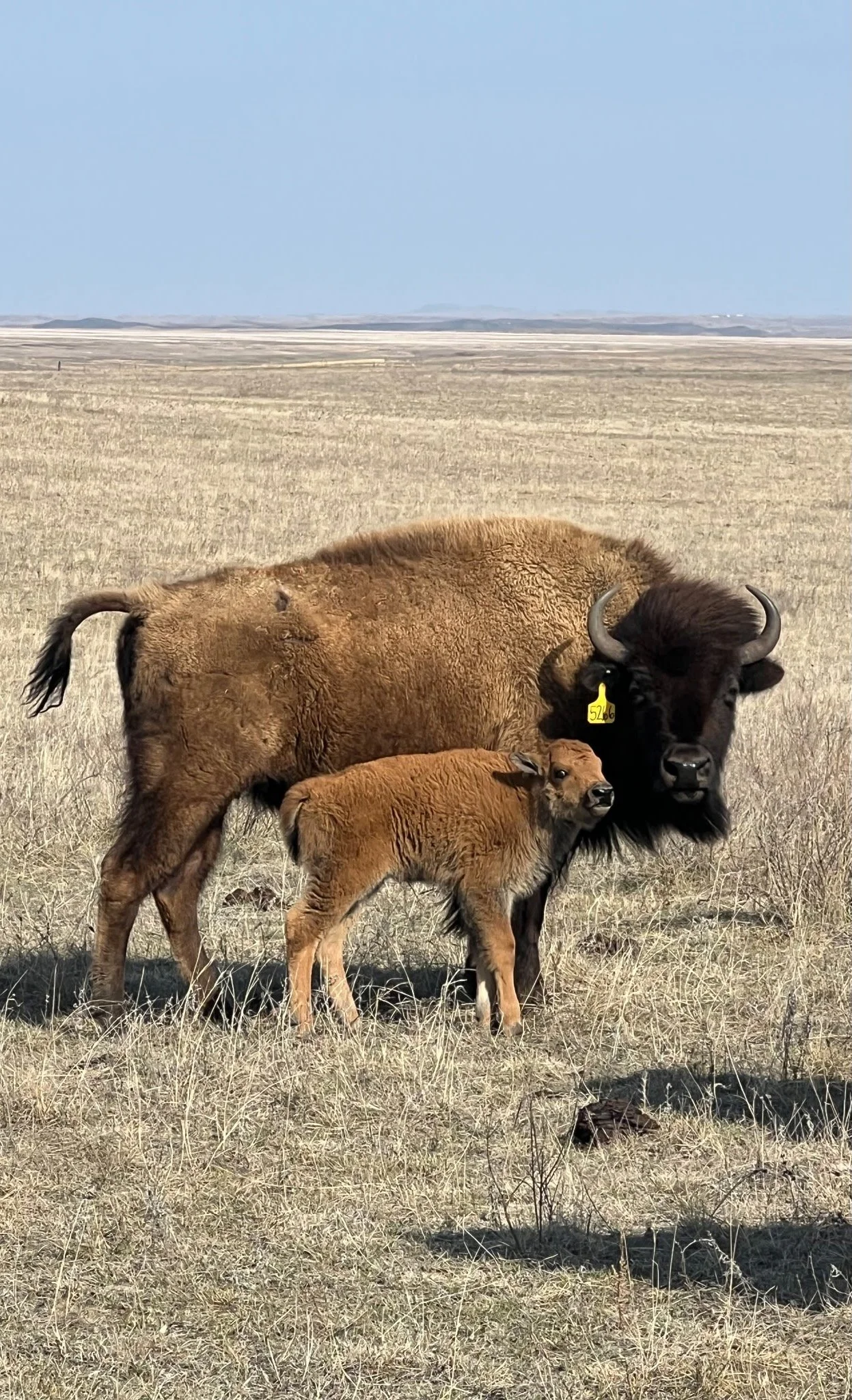
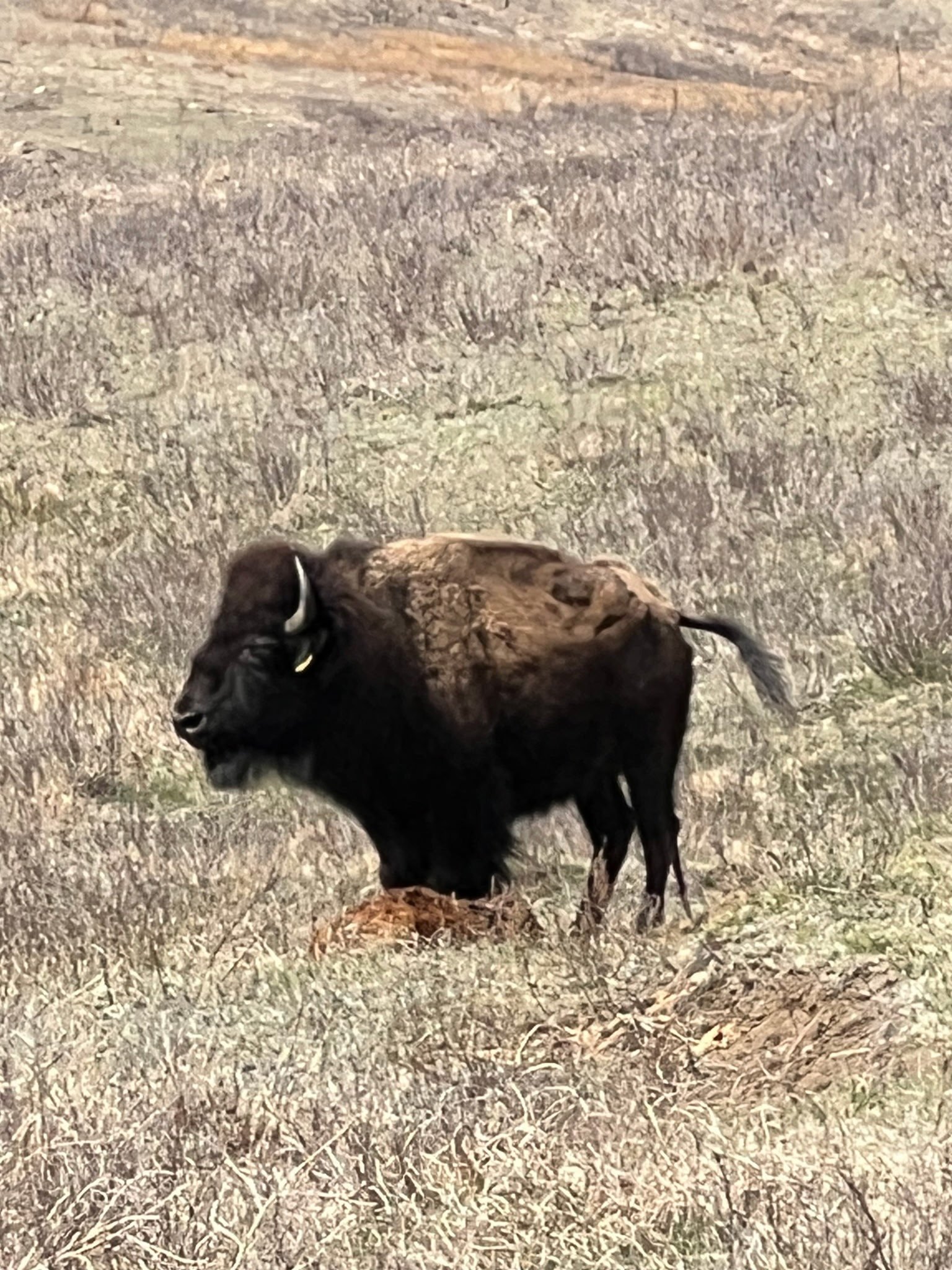
Photos from Ron Brownotter of Brownotter of Brownotter Buffalo Ranch on the Standing Rock Reservation.
Summary
Calving season reflects how Buffalo sustain and protect their herds through timing, instinct, and collective strength — a reminder that growth and survival depend on working together, just as restoration efforts do.
5 Key Points
Calving season runs from late April through June, peaking in May, aligning with fresh grass growth and milder weather to support cow and calf health.
Buffalo have a nine-month gestation, carrying through winter, with breeding (rut) occurring July through September.
Cows show clear signs before birth — isolating slightly, becoming restless, and seeking a quieter space while staying near the herd.
Newborn calves are born reddish in color, helping signal their status and blend into the spring landscape.
Calving season is a sensitive time — cows are highly protective, and herd behavior shifts to defend calves from perceived threats.
Read longer story below.
Calving season primarily takes place from late April through June, although some births can happen in July. Births typically peak in May. The timing lines up with fresh grass growth, giving nursing cows better nutrition, and milder weather helps improve survival for newborn calves. Like humans, the gestation period is about nine months, with cows carrying through winter. This puts bull rutting around July through September, when bulls compete hard to establish dominance for breeding.
Once a cow is ready to give birth, they semi-isolate and stay low to the ground, lying down and rising repeatedly. Their tails lift often, and they become restless. They look for a quieter, somewhat secluded spot, but don’t drift too far from the herd.
One of the most recognizable parts of calving season is how different the newborn calves look compared to the rest of the herd. They’re born a reddish hue, which helps signal “newborn” status within the herd and also blends into the spring grasses. They begin standing within 30 mins after being born and are usually 30 to 70 pounds.. They begin walking and running within two hours. This is by design to protect them against potential predators.
Ironically, one of the most sensitive times to be near a herd is also tourist season, when people are tempted to “pet the fluffy cows.” It’s a bad idea year-round, but especially now. Buffalo are matriarchal, and cows are highly protective when calves are on the ground. They stay close, face outward in a circle, and will charge if they feel a threat.
By having many calves at once, prey animals overwhelm predators and ensure enough survival to keep the herd strong.
Buffalo restoration looks a lot like this — growth you can see, year after year.
There are a lot of moving parts, and none of it happens alone.
Like the herd, it takes people working together, in sync, with one goal: Bringing Buffalo back where they belong — with Native communities.