"The Buffalo is the missing component."
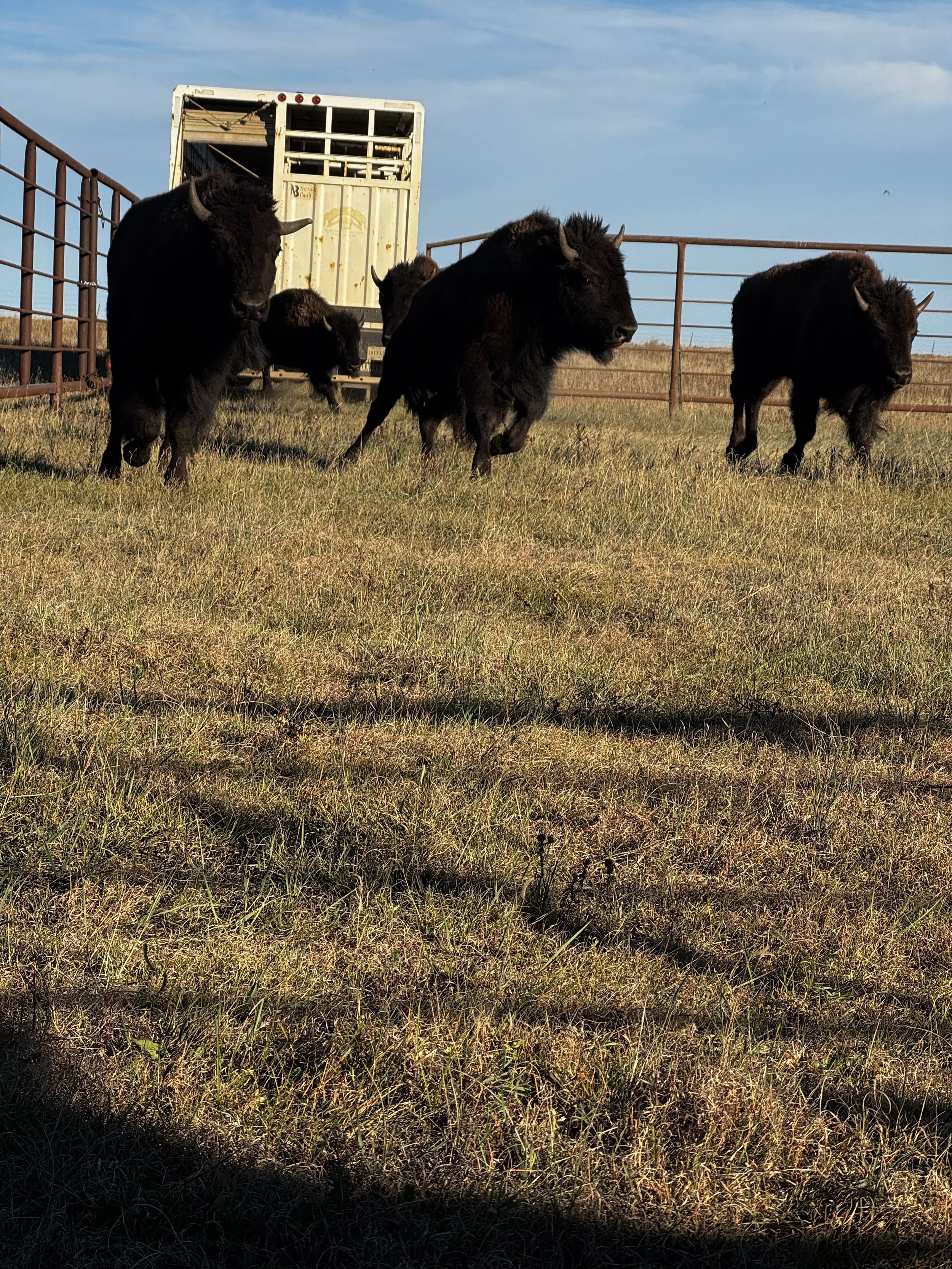
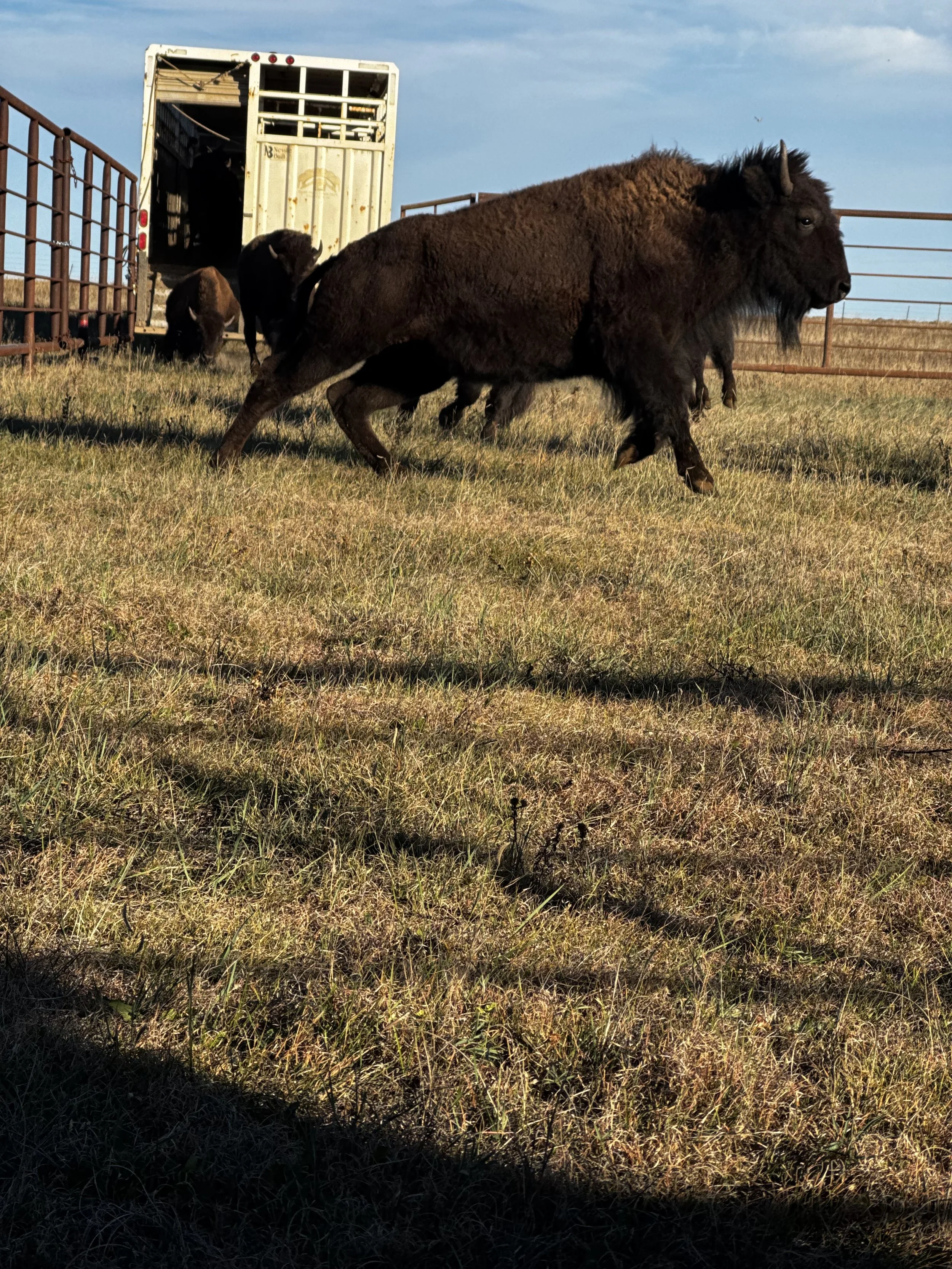
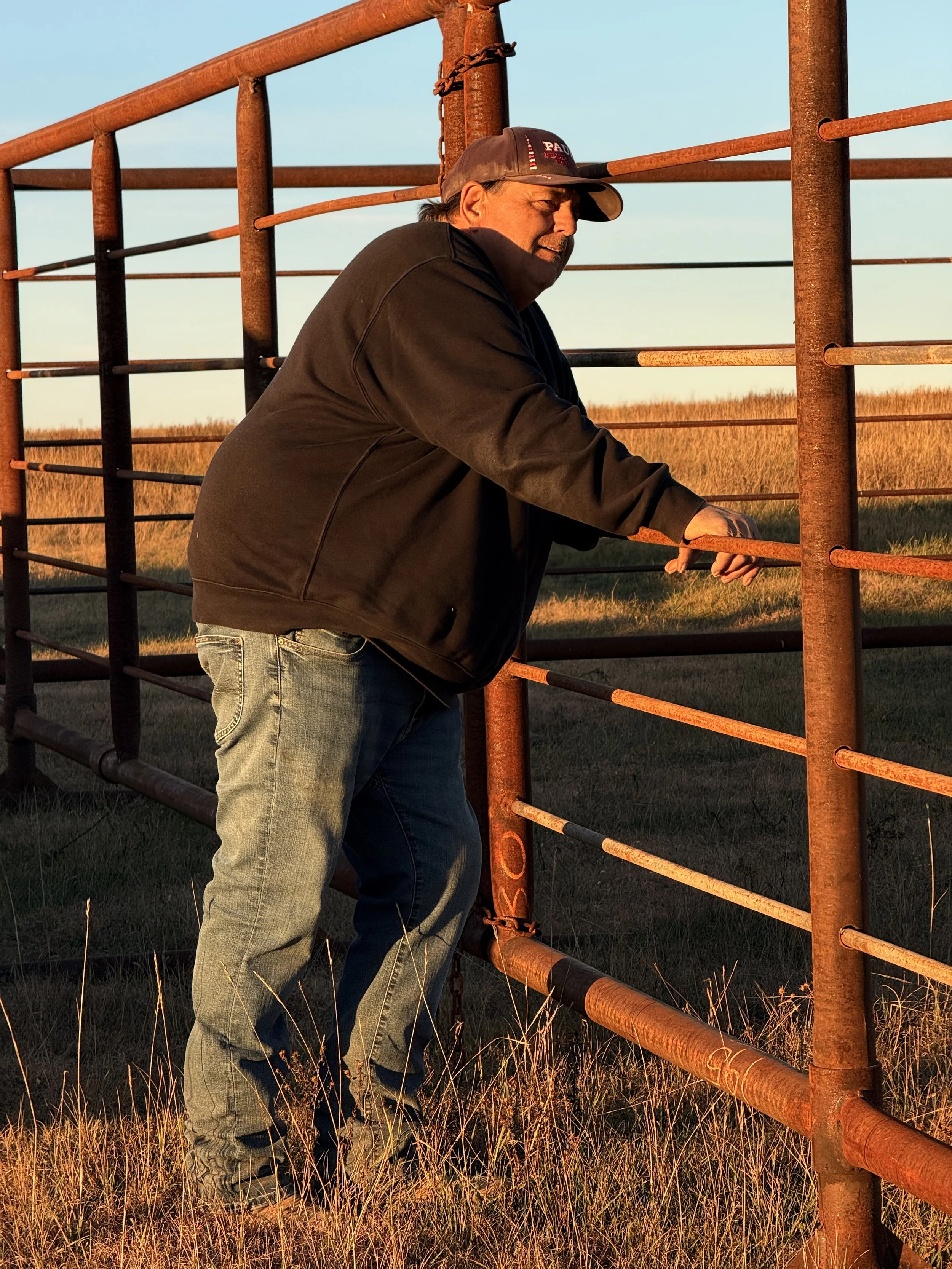
That is how John Kessler (Cheyenne River Sioux) describes what his people need to protect their culture, and on Oct. 24, 20 Buffalo relatives arrived on his land near Cherry Creek, South Dakota, to help fill that gap.
"The spiritual and the cultural and the language are all things that are important, and the more I've been in this job I can see that it's a struggle, it's a battle and it needs to be fought in this way," he said.
John was born in 1965 on his family's ranch, about 35 miles east of Cherry Creek and eight miles up from the Cheyenne River. His earliest memories are of riding horses, working cattle, cutting hay and gathering with neighbors at brandings. His parents, Bob and Judy Kessler, both served their Tribal government and passed that sense of responsibility on to their son.
"So it's always been about opportunity and giving back for the opportunities that have been given to us as Tribal members," he said.
John is now entering his 11th year as a Tribal council representative. When he first took office, he joined the Tribe's Buffalo Authority Board, and working with the Tribal herd changed how he saw animals he had lived beside his whole life.
"It really inspired me to see the difference between them and the cattle and how much more spirit they had and how their independence, they're not being a tame animal by no means," he said.
Over the next decade, John visited Buffalo ranches and gatherings across the country. He also thought about the history. Buffalo were once at the center of his people's lives until they were nearly wiped out in the 1800s, and a whole way of life was taken with them. Restoring them became personal. The range he holds through the Tribe's grazing permit system already had perimeter fencing from a previous operator, and he kept thinking: maybe someday.
John had followed Tanka Fund for some time. He noticed that most large Buffalo restoration efforts work directly with Tribal governments, which leaves individual Native ranchers with few places to turn.
"They all, most of them, deal directly with Tribal governments. And there was not really an avenue for individuals. But you guys are taking a little bit different approach," he said.
Tanka Fund partners with private Native ranchers who have the land and the calling to bring Buffalo home, whether they start with four animals or 400. For John's herd, Tanka Fund handled the logistics from start to finish, working with The Nature Conservancy to pick up surplus Buffalo and bring them safely to Cherry Creek.
The herd starts on a 600-acre pasture of deep breaks and good grass, fed by an artesian well and a small dam. The pasture sits right on the main road through Cherry Creek, where every family driving by can see them. Beyond it, about 5,000 acres of permitted, fenced land give the herd room to grow to 140 or 150 head. John has been photographing the pasture so he can document how the land changes as the Buffalo graze it.
A lifetime with cattle taught John how much work ranching takes, and Buffalo raise the stakes. Their handling facilities have to be bigger, taller, heavier and more expensive, and every fence gets tested. He is open about how that feels.
"I'm scared, you know, because it's a big, big step up. And I guess we're gonna, we're gonna make it and do the best we can," he said.
Fortunately, John doesn’t have to do this work alone, because it takes a herd to move the herd. Tanka Fund's technical assistance team and a network of rancher partners, some with 20 years or more of experience, stand beside him.
"And I will reach out. I'm not afraid to reach out," he said.
John doesn't plan to sell Buffalo anytime soon. His cattle operation covers the bills, so this herd can serve his community first. He and his wife share the work and look forward to bringing families and kids out to know the herd.
"The youth are the ones that really need to get into it and make this thing expand out," he said.
He is also talking with other producers, starting with the neighbor who shares his fence line, in the hope that more ranchers will think this way and the herds can grow together.
For John, bringing Buffalo home goes beyond ranching. It's about his people, their culture and their language.
"It's a big commitment, and it's a big need, to restore the Buffalo back to the lands, because the Buffalo are going to restore the land as well as the people."